Split Photo and Geometric Window Editorial Poster
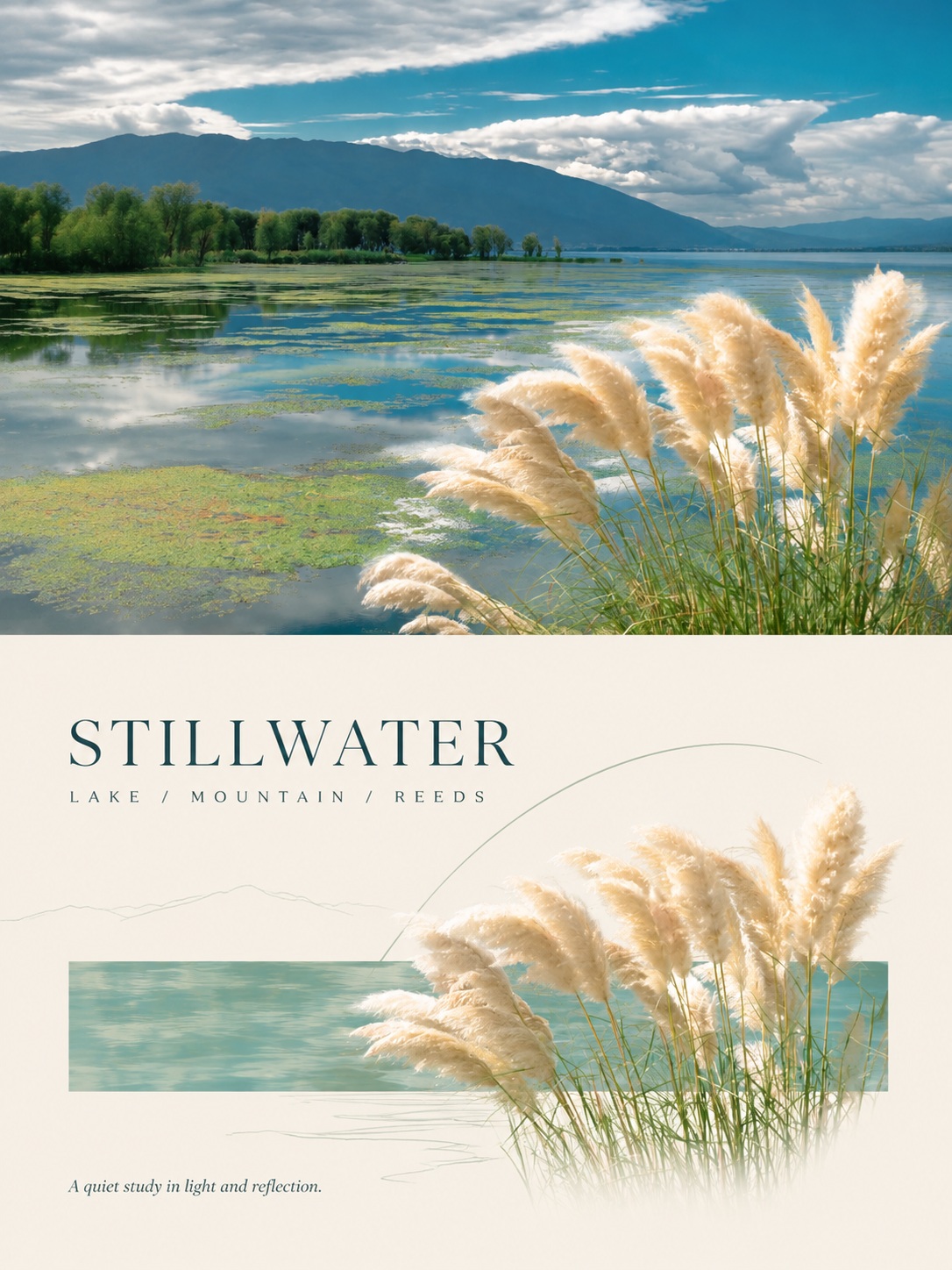
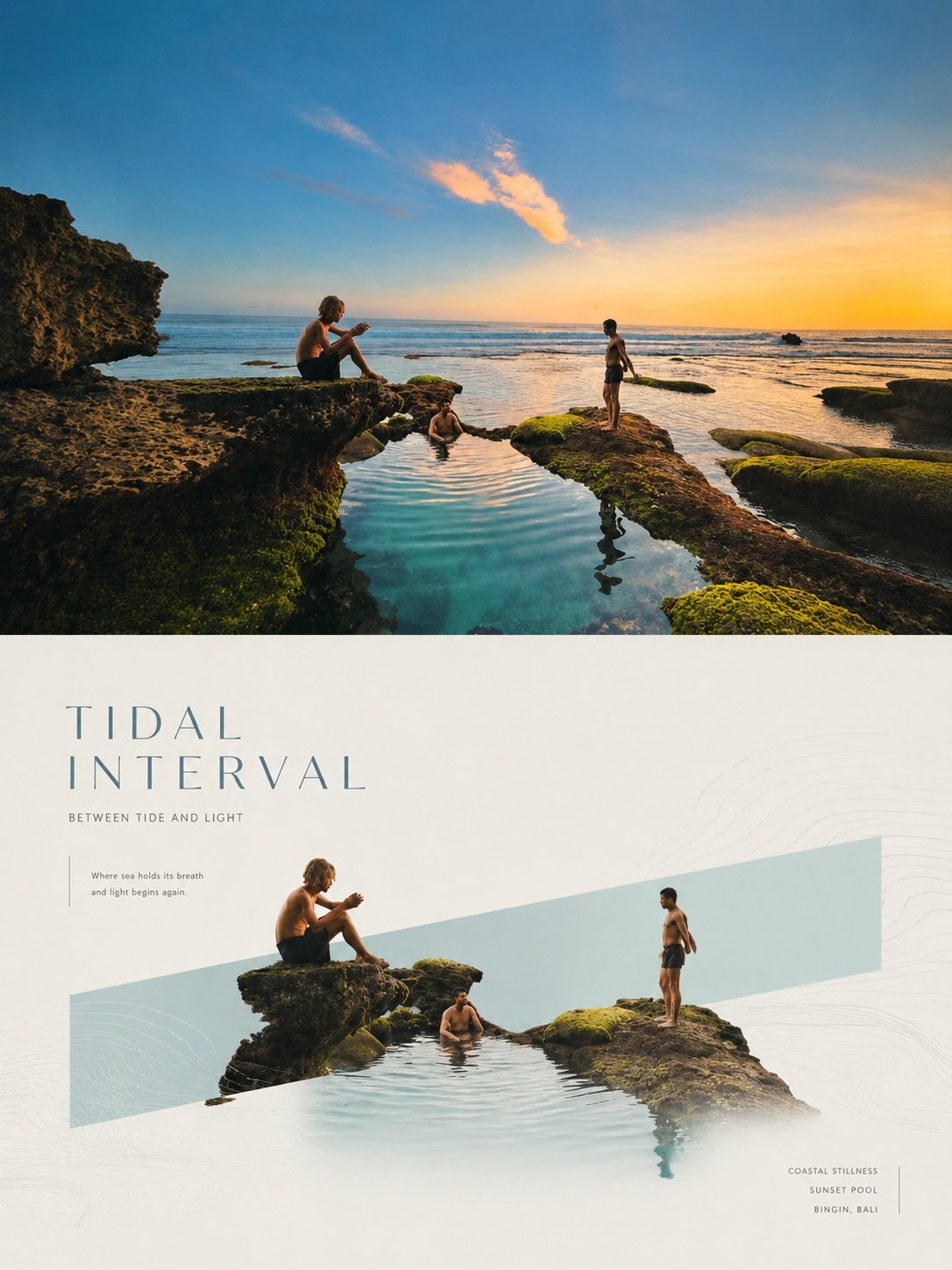
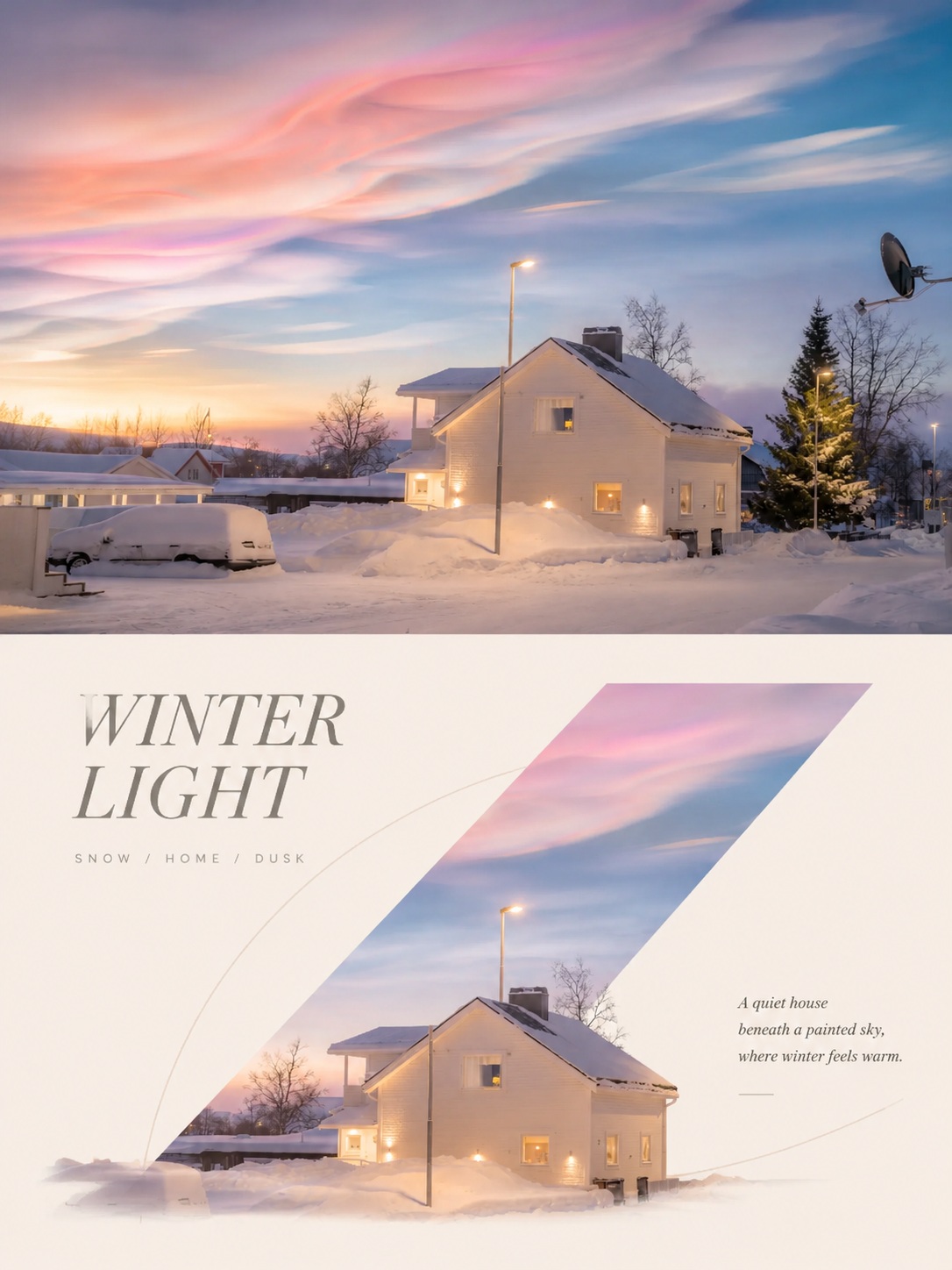
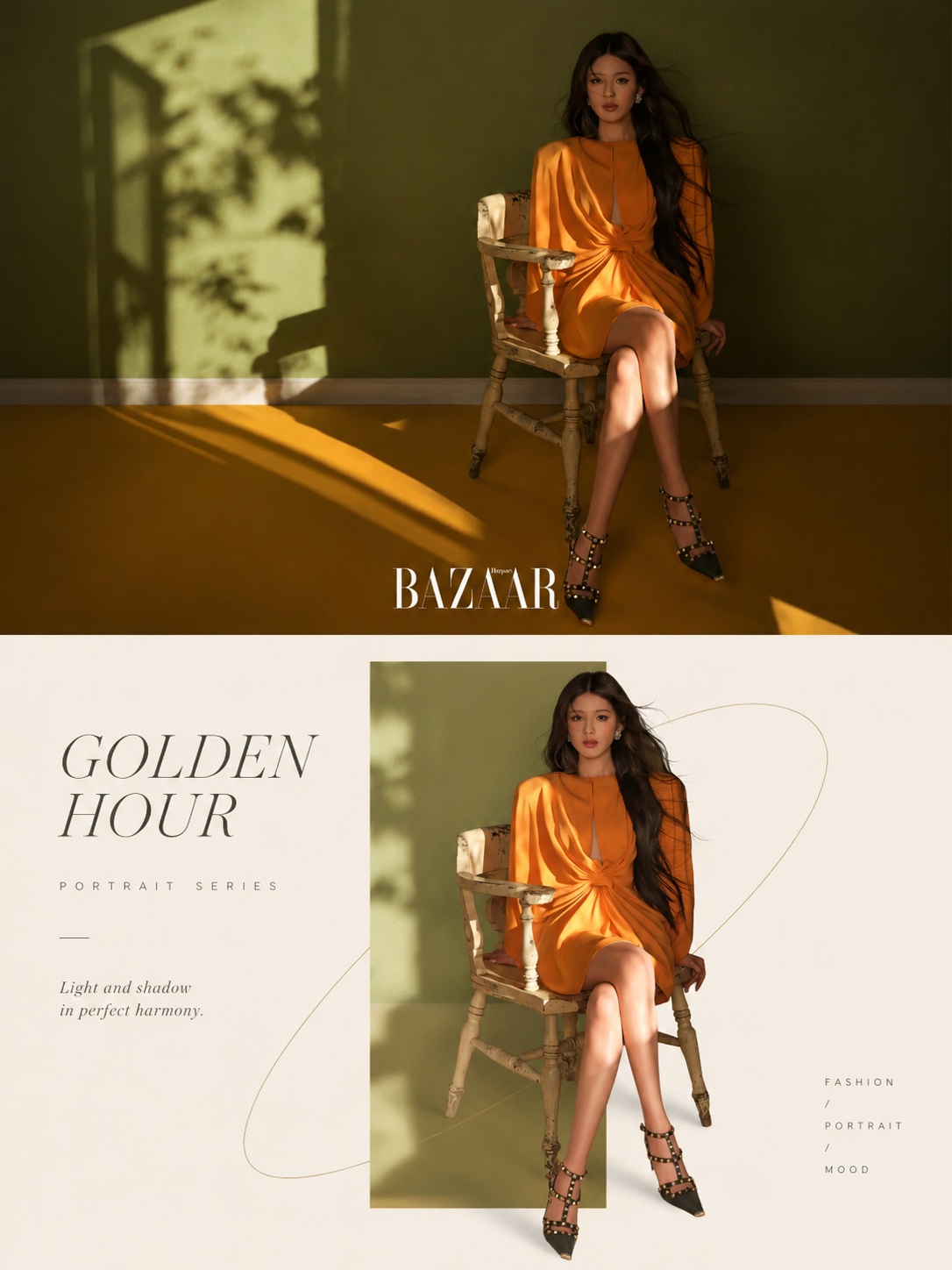
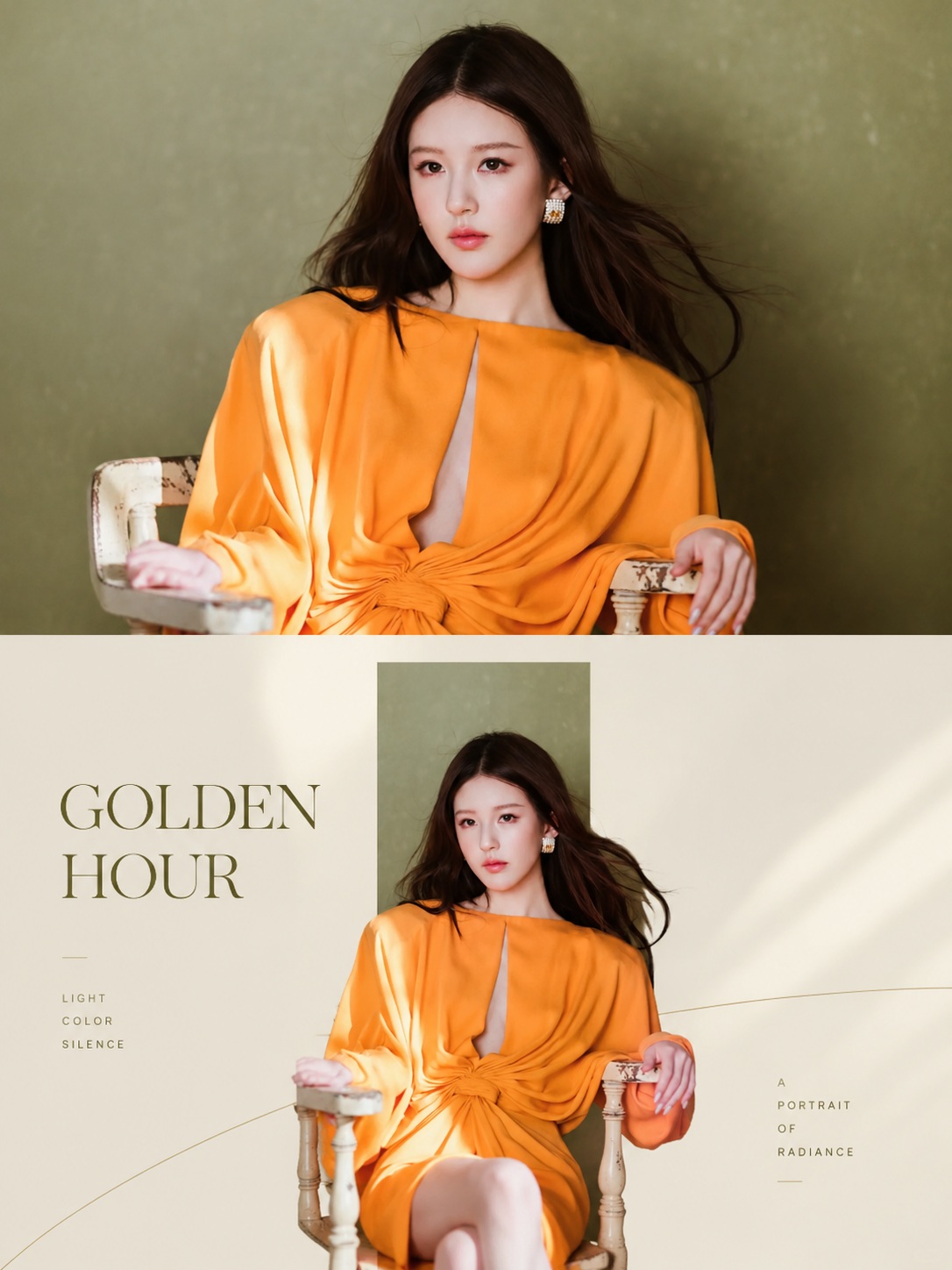
Create a separate premium editorial poster for each uploaded photo, pairing a lightly refined original photograph with a minimalist composition in which its subject crosses a pale geometric window.
Example outputs
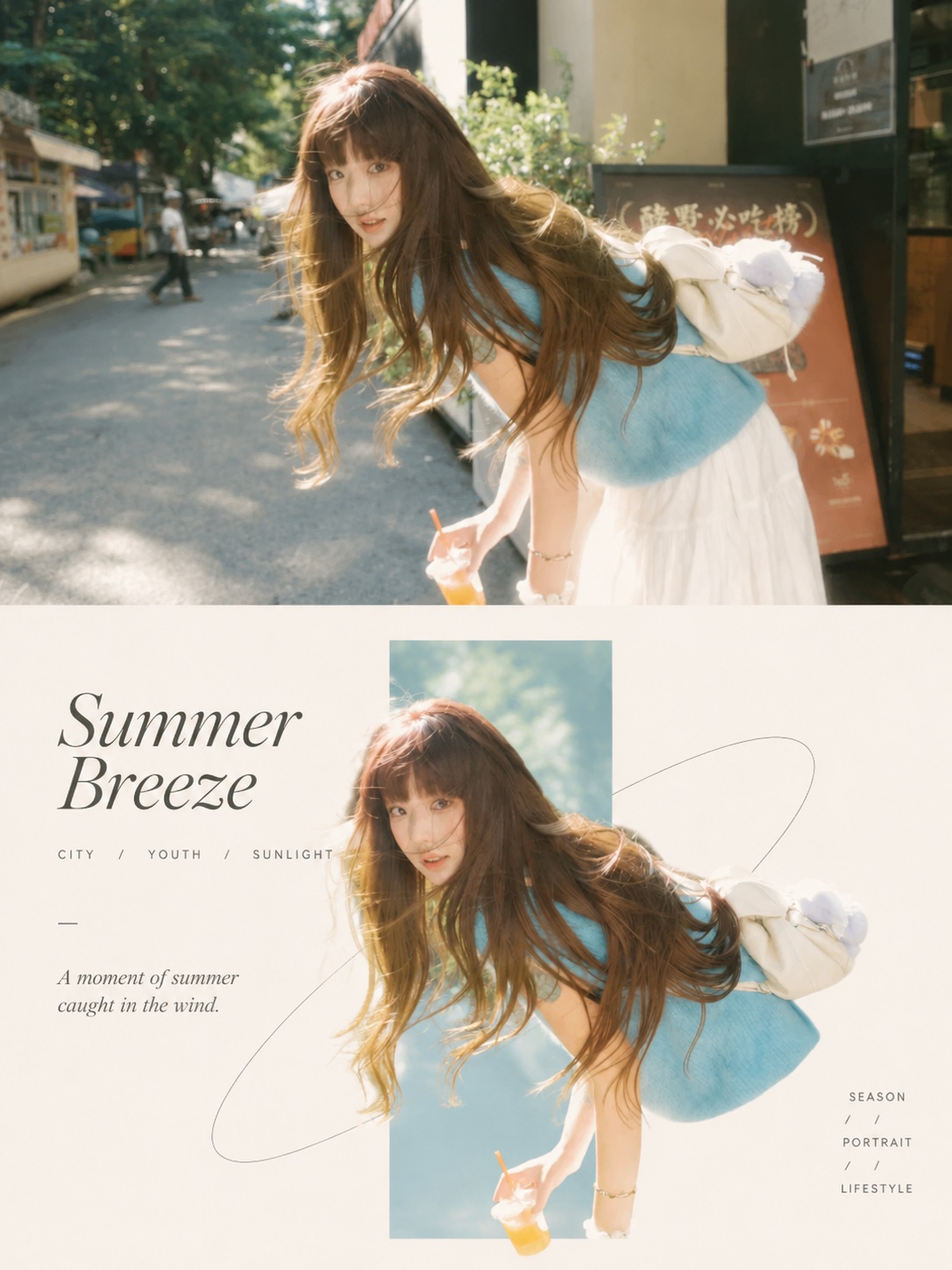
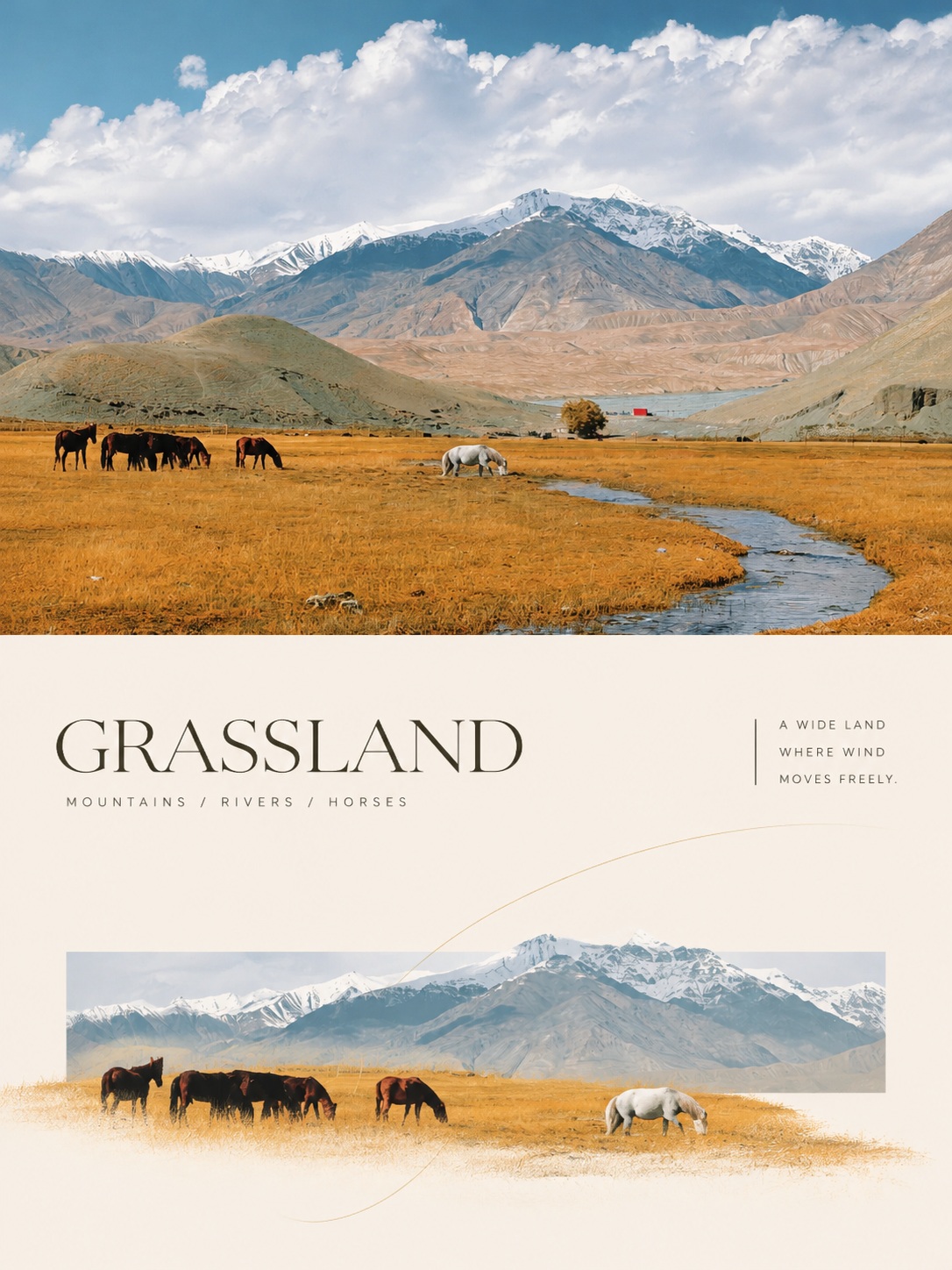
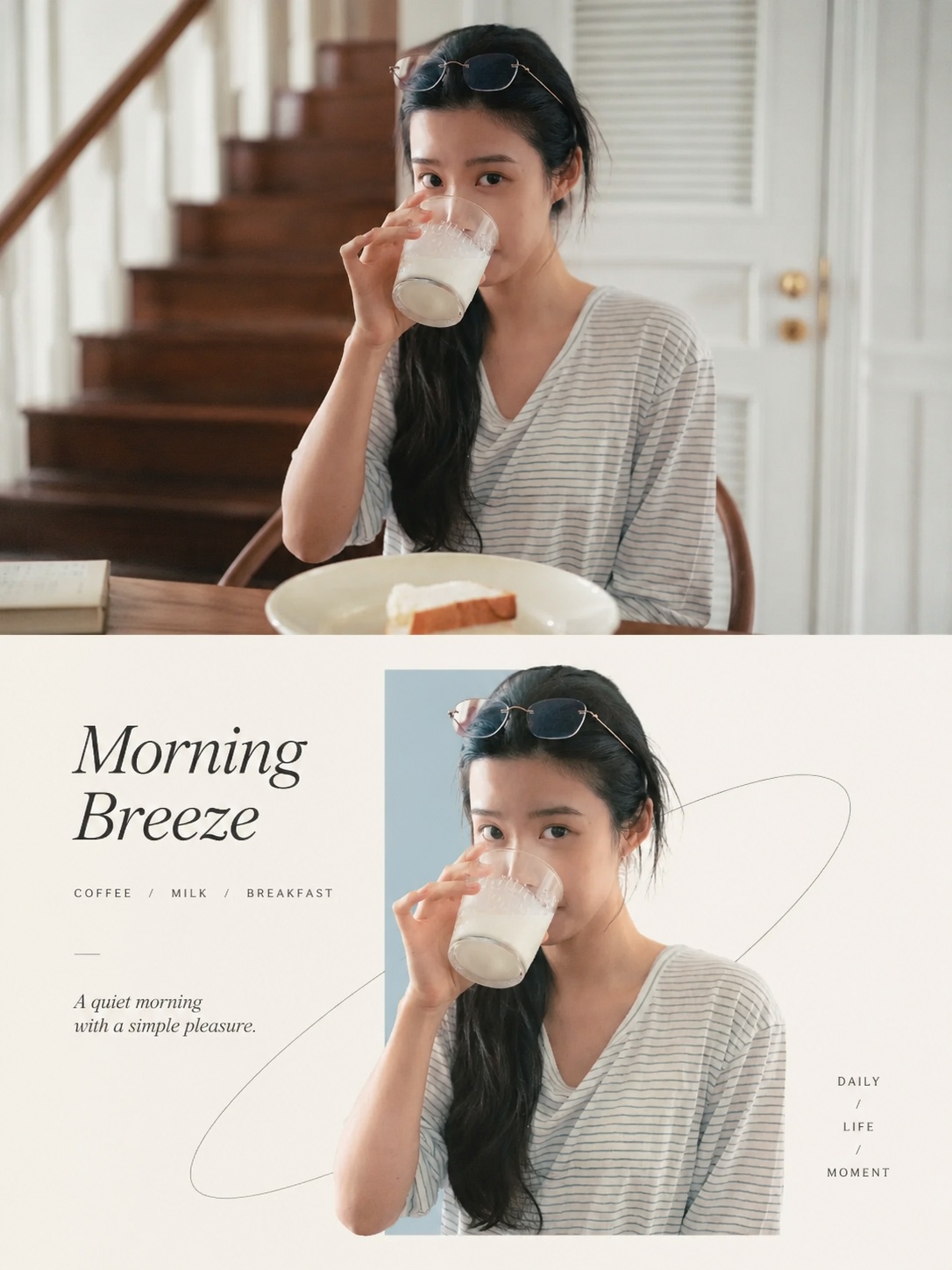
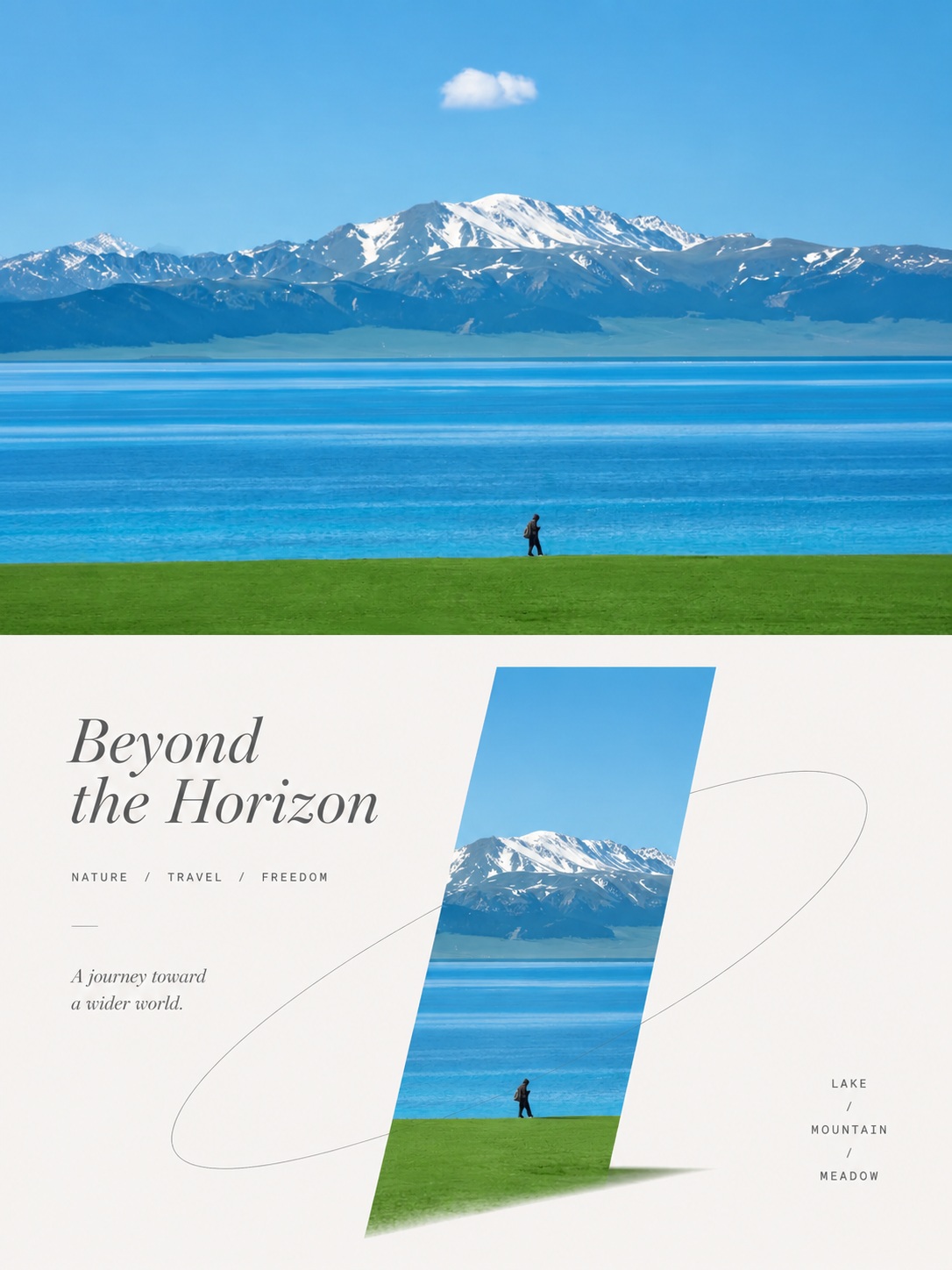
Prompt template
- Format
- Text
- Inputs
- Uploaded_photo (image) · Required
- Outputs
- Designed_poster (image)
For each uploaded photo, create one separate, high-end design poster. Do not combine multiple photos into a collage; output one independent poster per photo. Use a 3:4 portrait layout divided into two areas of exactly equal height, each occupying 50% of the image.

In the upper half, preserve the original photo, including the subject’s structure, realistic texture, natural lighting, and original color atmosphere. Apply only subtle, refined photographic color grading to give it the polished quality of a luxury brand advertisement, art magazine, or exhibition visual. To fit the layout, you may naturally extend the sky, ground, or surrounding background, but keep the subject itself unchanged.

In the lower half, extract the most recognizable subject, silhouette, pose, and narrative relationships from the photo, and reimagine them as a minimalist visual poster with a refined commercial aesthetic. The central visual idea is “real forms passing through a geometric window of emotion.” Place a narrow, restrained, low-saturation geometric color block in the composition as a visual anchor and spatial container. Its direction is flexible: choose a horizontal, vertical, or diagonal orientation according to the subject’s center of gravity, direction of movement, silhouette, and the rhythm of the layout. Render the subject with a photographic or finely detailed realistic appearance as it enters the color block and locally crosses, breaks through, extends beyond, or passes through its boundary. Create a natural sense of growth, spatial depth, and breathing room.

Keep the composition minimal, clear, and balanced, using the geometric block, the subject’s relationship to its boundary, and generous negative space to establish visual order. The subject may be centered, off-center, grow vertically, or extend horizontally, but maintain a single focal point. Use a white, light gray, or very pale warm background. You may add extremely subtle cultural patterns, linear graphics, topographic lines, water-wave lines, contours of light and shadow, or abstract symbols as faint supporting layers.

Draw the palette from the most distinctive and expressive color relationships in the photo above, translating them into a refined system of a pale geometric window, the subject’s realistic colors, and a very small amount of neutral typography. The color block may use misty blue, pale cyan, off-white, soft pink, warm gray, pale gold, or another light tone that suits the original photo. Keep the overall result light, clean, modern, and polished.

Integrate typography naturally as part of the layout. You may derive a brief English title from the photo’s theme, mood, action, state, or symbolism, accompanied by a small amount of secondary text, such as a subtitle, location, status word, or brief annotation. The title may be horizontal, vertical, or arranged in relation to the color block and subject. Set supporting information neatly in a small size and light weight, with generous letter spacing. Aim for the refined editorial sensibility of luxury real estate, luxury goods, an aesthetic magazine, or a seasonal visual campaign.

Emphasize East Asian negative space, modern order, the vitality of nature, and elevated commercial aesthetics. Whether the subject is a person, animal, plant, building, object, food, vehicle, or natural landscape, maintain a clear and elegant visual relationship between the photographic subject and the geometric window of emotion.
What you'll create
The original photograph fills the upper half while the lower area reinterprets its recognizable subject around a narrow geometric block. Fine editorial typography and generous negative space support a realistic form that crosses the block’s boundary.
Frequently asked questions
Must the geometric block remain vertical?
Its orientation may be horizontal, vertical or diagonal, chosen to suit the subject’s direction and visual rhythm.


Comments
Tried this prompt? Share what you made, compare results, or ask a question