Photo and Handwoven Tapestry Editorial Poster
Create a vertical editorial poster that pairs an original photograph with a tactile, vintage-inspired tapestry reinterpretation of its subject.
Example outputs
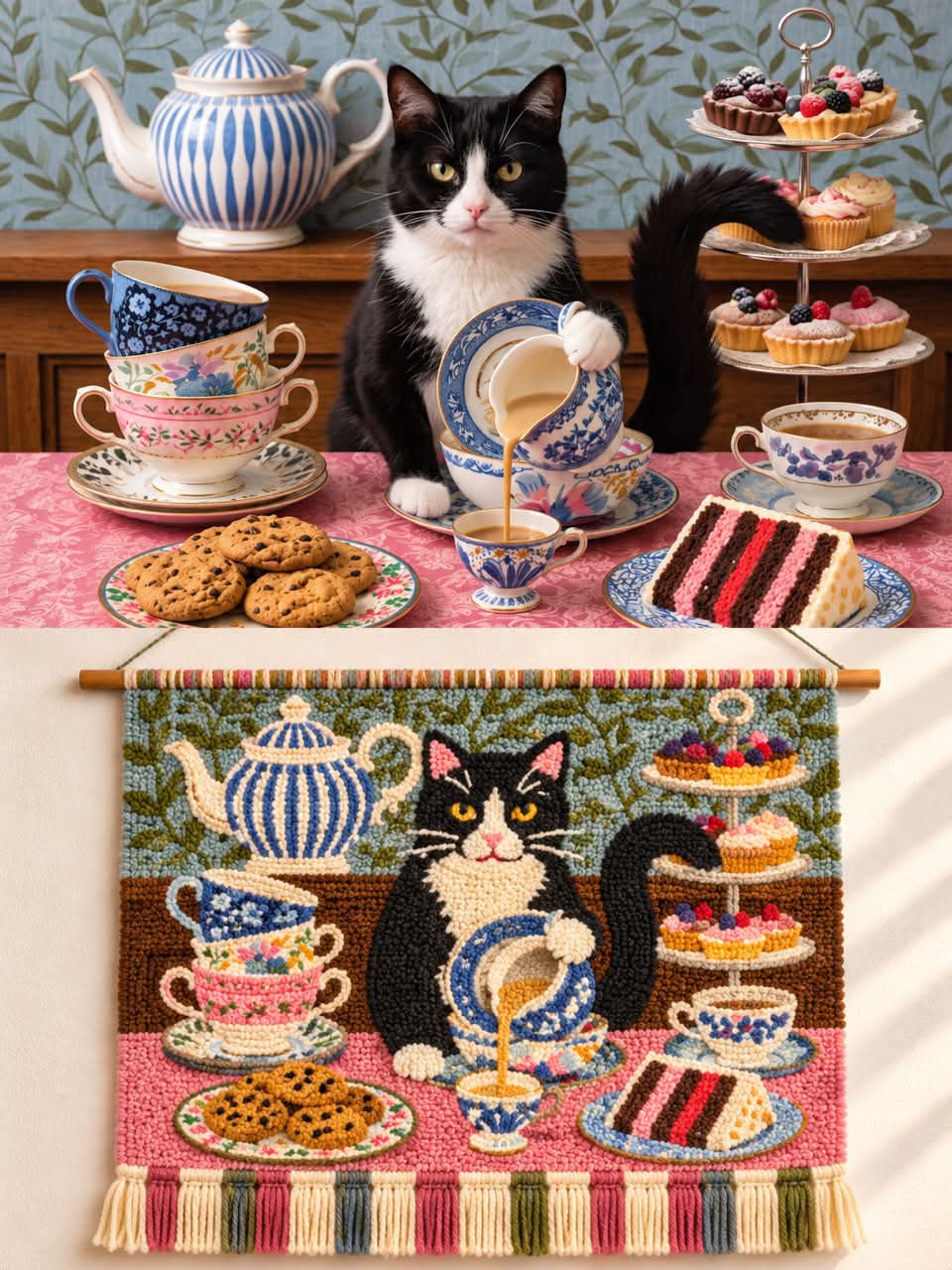
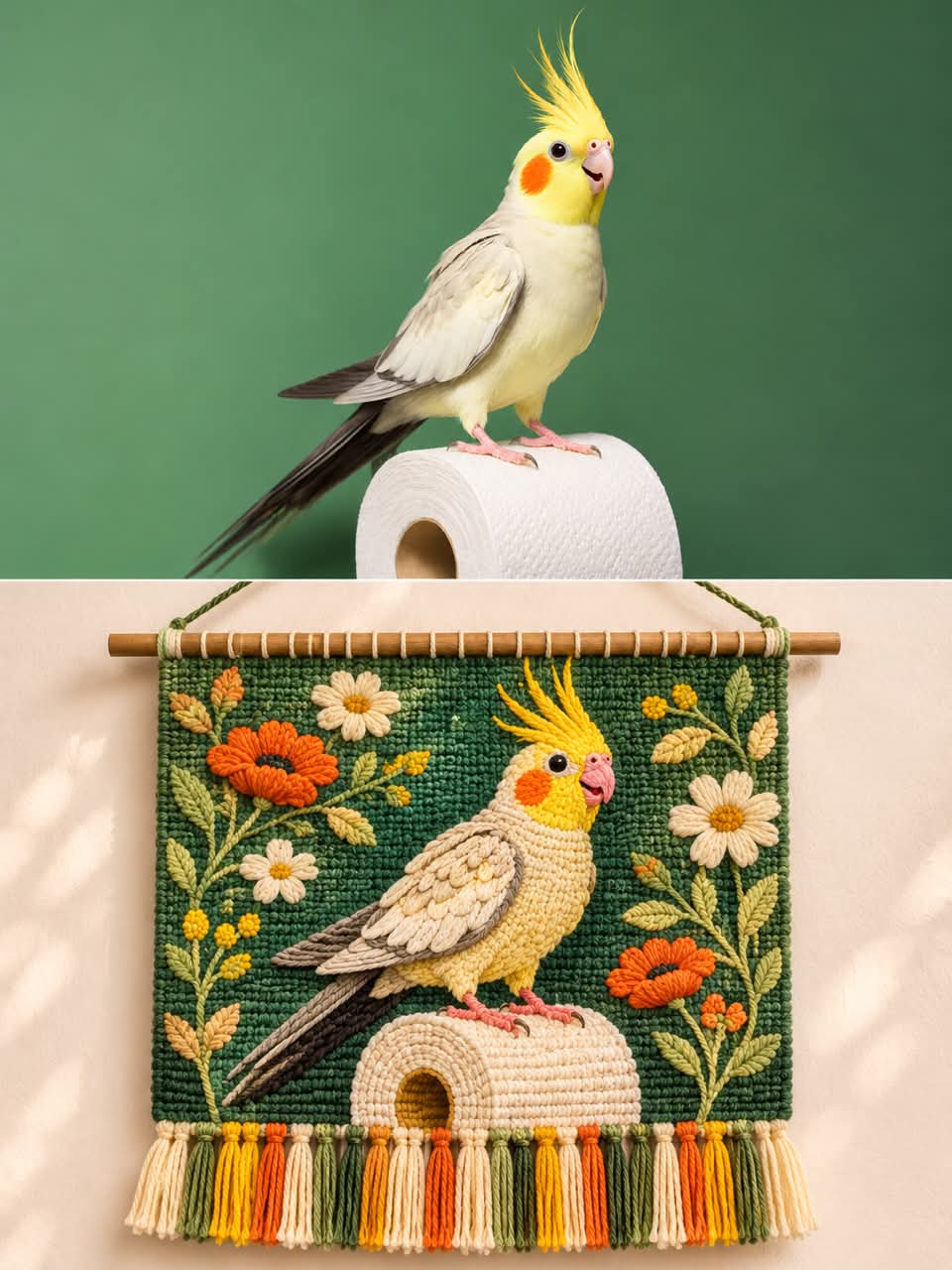
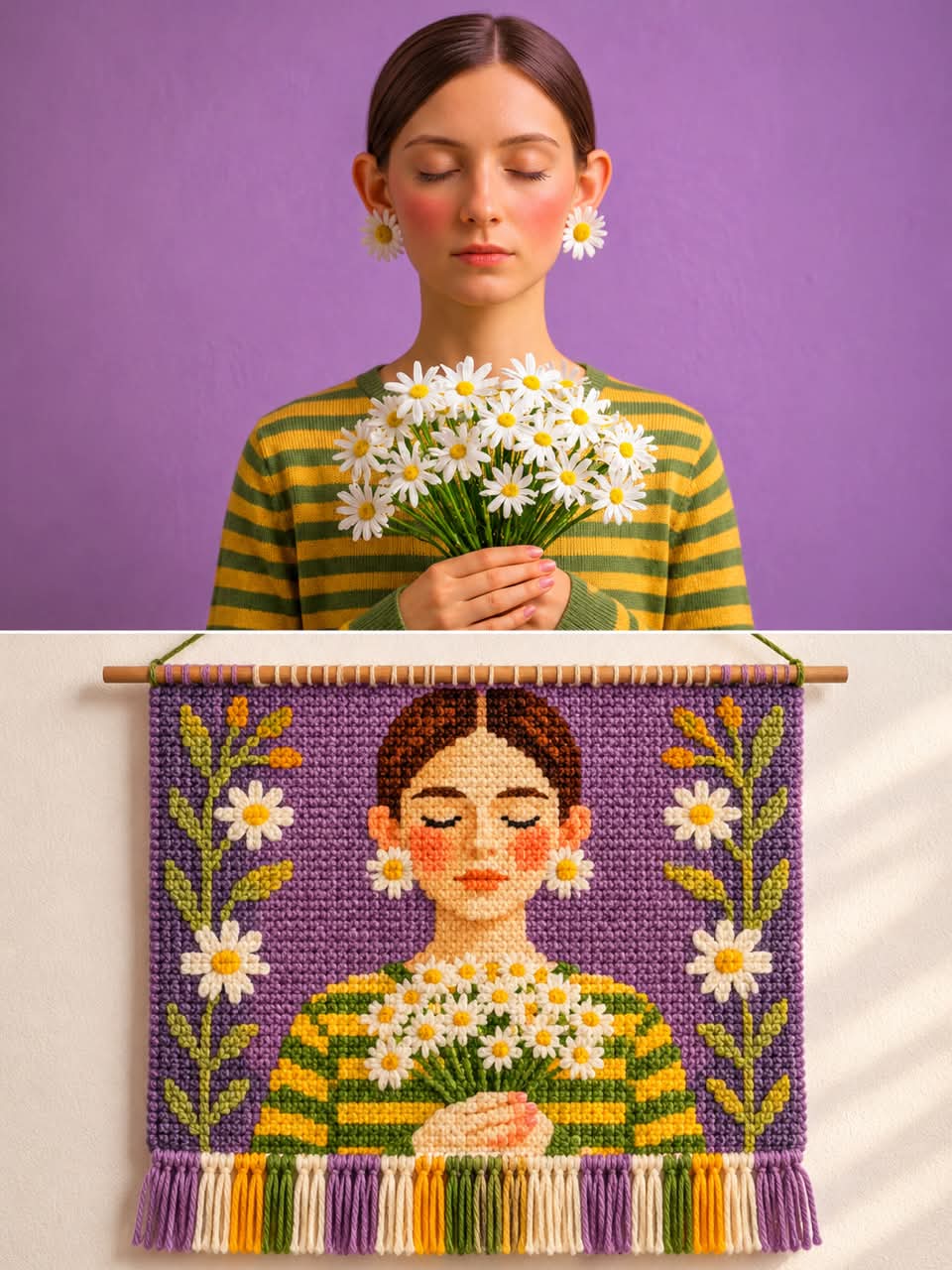
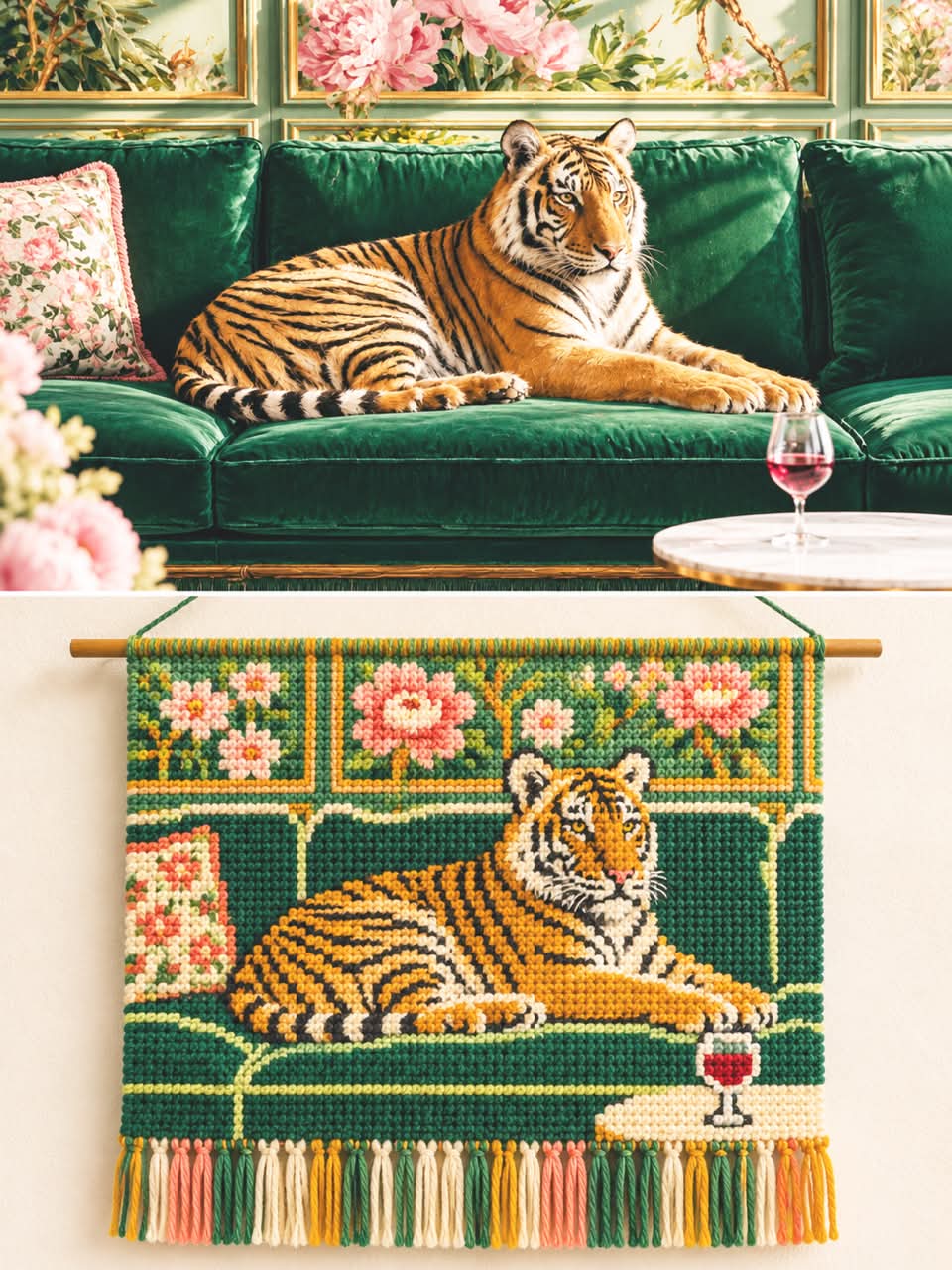
Prompt template
- Format
- Text
- Inputs
- Uploaded_photo (image) · Required
- Outputs
- Editorial_poster (image)
Create one independent high-end editorial poster for each uploaded photo. Do not combine multiple photos into a collage. Process and output each photo as a separate poster.

OVERALL FORMAT

Use a strict vertical 3:4 composition. Divide the canvas horizontally into two exactly equal sections, with a 1:1 height ratio: the top half occupies exactly 50% of the canvas and the bottom half occupies exactly 50%. Make the two sections feel visually connected as one refined art-publication cover.

TOP HALF — ORIGINAL PHOTOGRAPH

Preserve the original photograph as faithfully as possible. Keep the main composition, subjects, identity, facial features, body proportions, poses, expressions, clothing, objects, and spatial relationships unchanged. Preserve realistic photographic texture, natural lighting, shadows, atmosphere, and the original color mood. Apply only subtle, sophisticated editorial color grading, evoking a premium magazine photograph, contemporary art book, or high-end independent publication. Keep the image photorealistic and authentic, never overly retouched or artificially stylized.

If needed to fit the 3:4 composition naturally, extend the sky, ground, walls, or surrounding environmental background. Make any background extension seamless and photographic. Never stretch, distort, reshape, replace, or alter the main subject.

BOTTOM HALF — VINTAGE HANDWOVEN TAPESTRY WALL HANGING

Transform the uploaded photograph into a charming, handcrafted textile wall hanging inspired by vintage woven tapestries, retro folk art, traditional needlework, and whimsical 1970s fiber art.

Original subject: Use the uploaded photograph as the primary reference. Preserve the most recognizable subject, distinctive silhouette, pose, proportions, colors, and essential visual features. Simplify complex details into playful, bold, embroidered shapes while keeping the subject instantly recognizable.

Textile art style: Reinterpret the entire photograph as a handmade tapestry combining chunky needlepoint embroidery, looped wool stitches, and traditional woven textile techniques. Construct every subject and decorative element from thick, colorful yarn stitched into a visible woven fabric base.

Yarn texture: Emphasize tightly packed, individually visible yarn stitches, slightly raised wool loops, irregular stitch lengths, fuzzy fibers, and authentic handcrafted imperfections. Make the surface feel soft, tactile, dimensional, and beautifully imperfect, like a real vintage textile artwork.

Composition: Arrange the main subject prominently within a rectangular hanging tapestry. Simplify the original background into decorative, abstract woven shapes, flowing organic patterns, and whimsical folk-art motifs inspired by the photograph. Maintain a harmonious balance between the subject and surrounding textile patterns.

Color palette: Extract the dominant colors from the original photograph and reinterpret them in a vibrant yet nostalgic yarn palette. Combine earthy greens, warm cream, burnt orange, tomato red, mustard yellow, sky blue, and deep forest green where appropriate. Use solid embroidered color blocks with subtle yarn variations rather than digital gradients.

Vintage folk-art details: Introduce playful botanical motifs, stylized leaves, flowers, stars, mushrooms, or geometric patterns only when appropriate to the original photograph. Use slightly irregular outlines, simplified shapes, and charming handmade asymmetry.

Wall-hanging construction: Suspend the finished tapestry from a natural wooden dowel running horizontally across the top. Attach a simple twisted yarn hanging cord to both ends of the dowel. Add a generous row of long, loose yarn fringe along the entire bottom edge, using colors coordinated with the tapestry design. Let the fringe hang naturally with slightly uneven lengths and visible individual strands.

Background and presentation: Display the finished textile artwork hanging against a clean, warm off-white plaster wall. Show the complete wooden dowel, hanging cord, rectangular tapestry, and decorative bottom fringe. Include soft natural daylight, gentle wall shadows, and realistic textile depth.

Photography: Capture the artwork as a high-resolution editorial product photograph of a genuine handmade wall hanging. Emphasize the tactile wool texture, visible stitching, natural wooden materials, and subtle imperfections of traditional craftsmanship.

Final aesthetic: Whimsical, nostalgic, colorful, cozy, handmade, and inspired by 1970s textile design, vintage cottagecore decor, and contemporary fiber art.

Format: Vertical 3:4 composition, full tapestry visible, centered presentation, high resolution, realistic yarn texture.

Avoid flat digital illustrations, smooth vector graphics, watercolor painting, printed fabric, plastic 3D effects, glossy materials, perfectly uniform machine stitching, digital gradients, blurry yarn texture, typography, watermarks, or cropped fringe.

The finished image must convincingly resemble a real physical, handmade embroidered tapestry hanging from a wooden dowel, with clearly visible chunky yarn stitches and long decorative fringe. Do not simply apply a fabric-texture filter to the original photograph.
What you'll create
A source photograph occupies the top half while chunky yarn stitches recreate its subject below. A wooden dowel and long fringe make the lower image resemble a real hanging textile, linked to the photo in a vertical equal-half design.
Usage instructions
Provide one photo per poster; each photo produces its own separate poster rather than a collage. The original photo anchors both halves, so choose one with a clear subject and recognizable silhouette to guide the tapestry reinterpretation.
Frequently asked questions
Is a fabric filter sufficient?
No; the prompt explicitly requires a convincing separate handmade tapestry.




Comments
Tried this prompt? Share what you made, compare results, or ask a question