Photographic and Abstract Diptych Poster
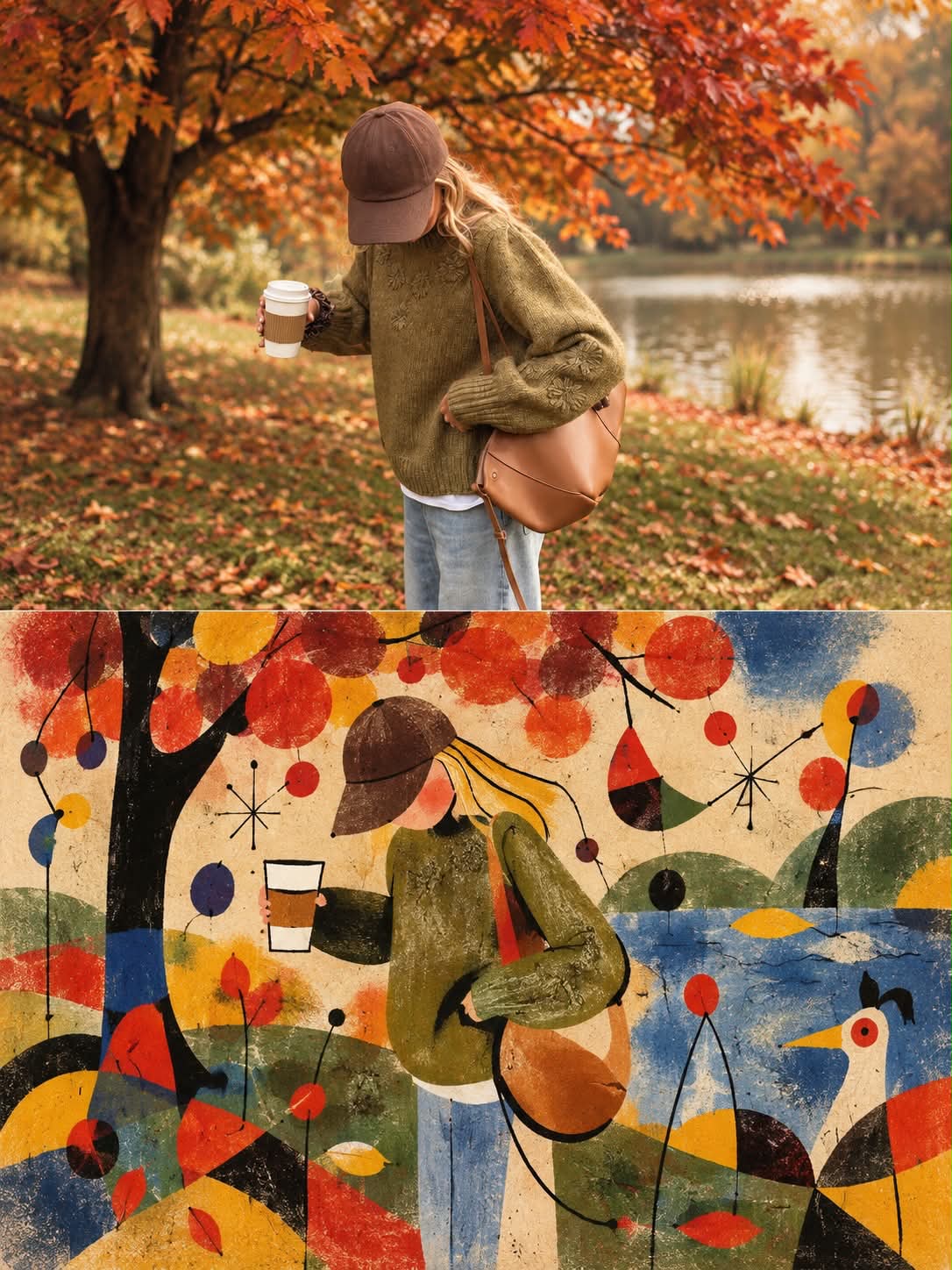
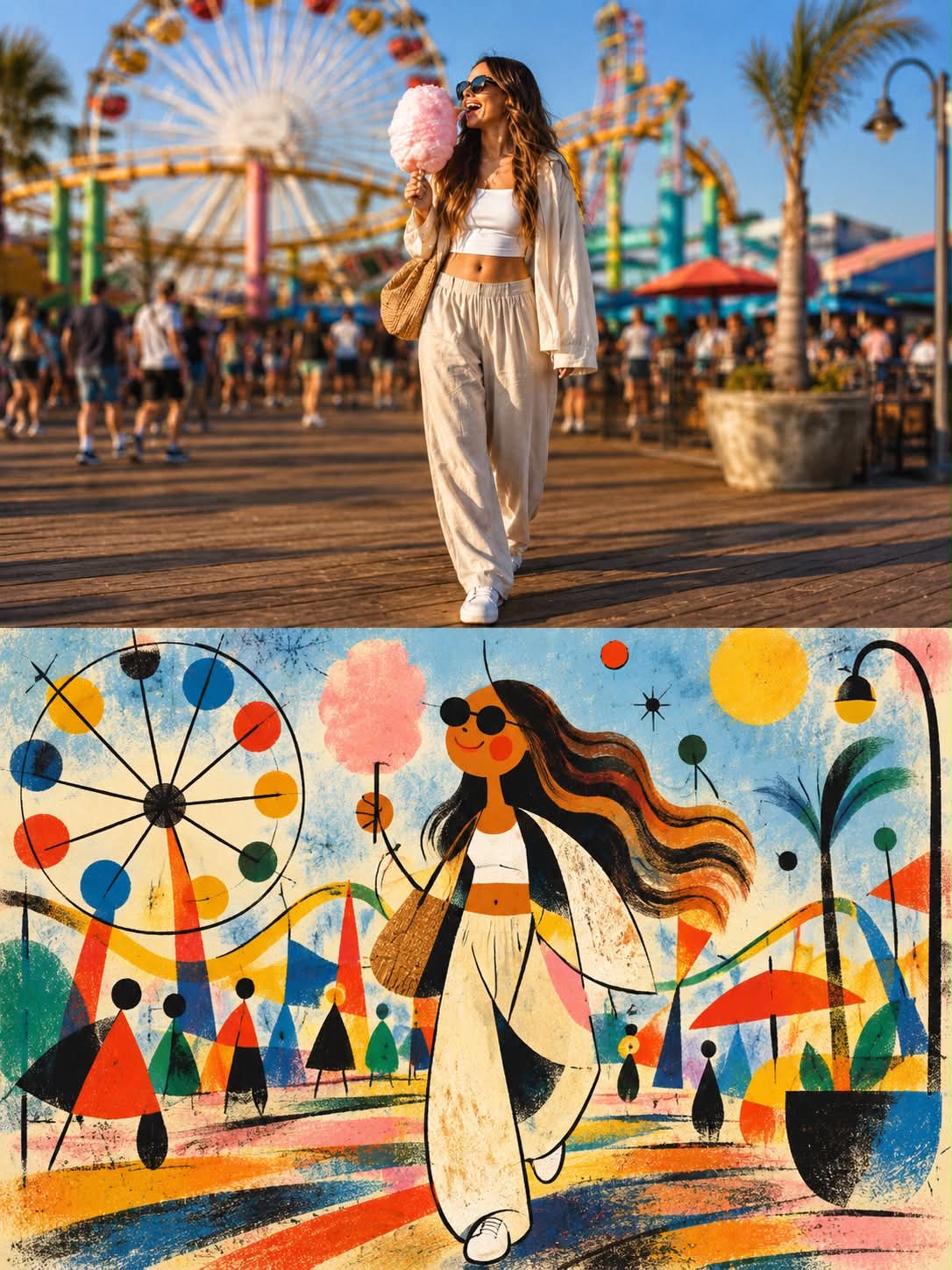
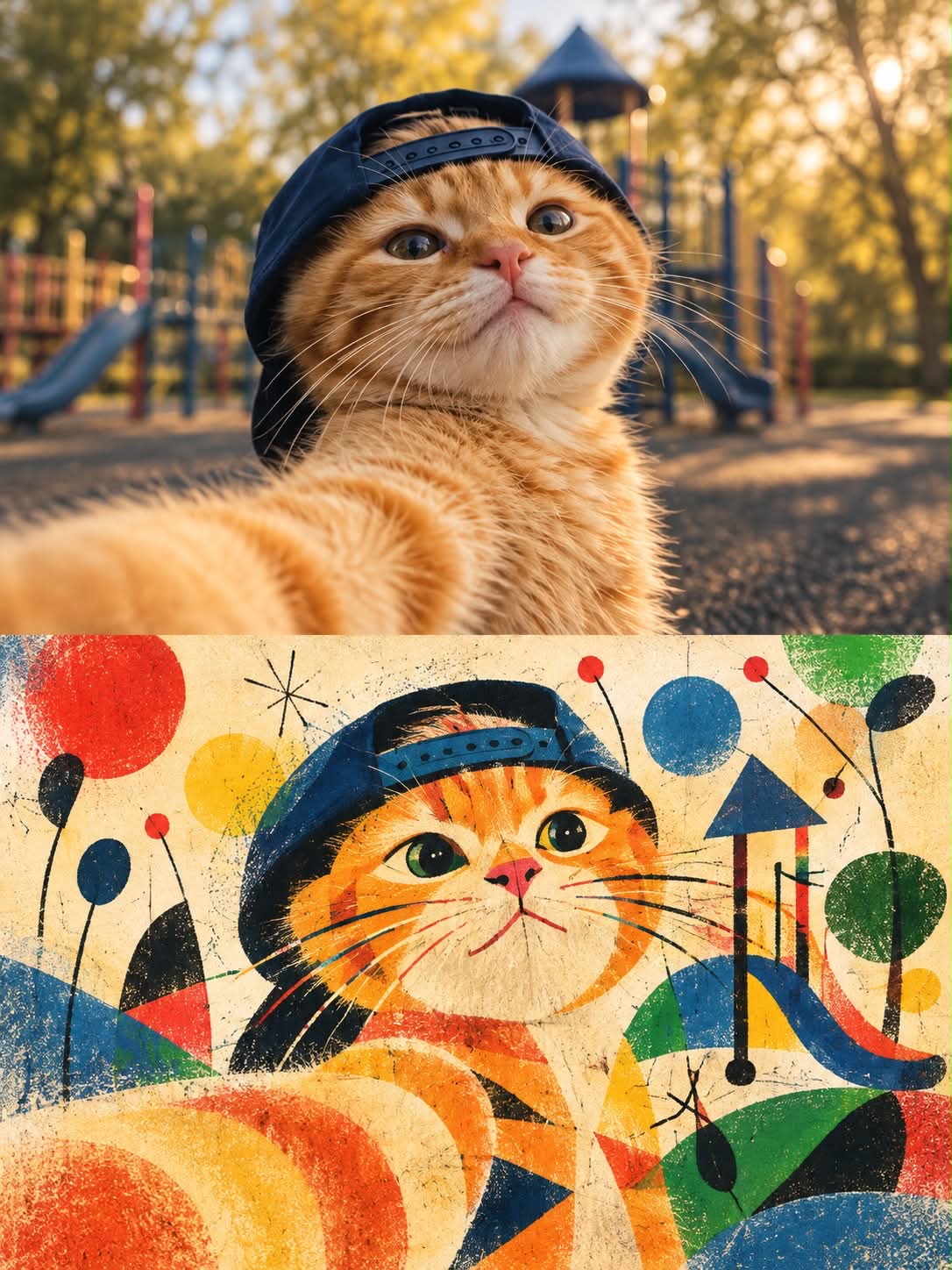
Create a vertical diptych pairing a faithful photograph of the uploaded subject with a childlike, abstract reinterpretation of the same subject.
Example outputs
Prompt template
- Format
- Text
- Inputs
- Uploaded_photo (image) · Required
- Outputs
- Diptych_poster (image)
Use each uploaded photo as the only visual source. Create one independent poster per uploaded photo and output each poster separately. Never combine multiple photos into one image.

Design each image as a vertical 3:4 diptych poster with a clear top-and-bottom split. Separate the two sections naturally while keeping them visually unified as one complete artwork. The viewer should immediately understand that both halves depict the same subject in two different visual languages.

Upper half — original subject:
Show the main subject from the uploaded photo faithfully and photographically. Focus on the subject itself, whether it is a person, cat, dog, or other animal. Preserve its recognizable real-world identity as accurately as possible, including face shape, facial features, hairstyle or fur outline, hair or fur color, skin tone, body proportions, representative clothing or accessories, expression, and pose. Keep the subject clearly identifiable. The background, architecture, and environmental setting may remain, but should be visually softened and de-emphasized. Do not make the background the main attraction or overcomplicate the scene.

Lower half — abstract childlike reinterpretation:
Reimagine the same subject as a minimal, naive, kindergarten-level, rough-sketch abstract illustration with a Joan Miró-inspired spirit. Do not make it a mechanically realistic redraw. Transform the subject into an abstracted, simplified, innocent, awkward, cute, and playful artistic translation based on its real distinguishing traits. Preserve enough identity cues to make it obvious that this is the same person or animal as in the upper half, while expressing it through a more abstract, avant-garde, art-driven visual language.

Illustration style:
Make the lower half simple, childlike, naively handmade, and emotionally expressive. Use an asymmetrical composition, strong minimalism, and abstract expressive power. Simplify the subject into bold, playful, imperfect shapes, lines, and symbolic forms rather than literal realism. Make the figure clumsy, silly, adorable, and emotionally alive. Lean toward abstract expressionism with a Joan Miró-like poetic surreal sensibility, while maintaining a strong correspondence with the photographic subject above.

Visual mood and effects:
Create a strong contrast between extreme simplicity and rich visual density in selected areas. Combine a minimal composition with an intense artistic atmosphere. Use complementary colors as the main color logic, and build a mood that feels underexposed, mysterious, exaggerated, dreamlike, and experimental. Include qualities such as motion blur, multiple exposure, soft blur, defocus, foreground blur, smearing, dragging trails, psychedelic light behavior, dim shadows, overexposed highlights, and the coexistence of dark and blown-out areas. The final feeling should be abstract yet dreamy, avant-garde, moody, poetic, and visually hypnotic.

Color and surface:
Use a complementary color palette with subtle Morandi-like painted softness while keeping the image expressive and strange. Give the lower half a screen-print texture, with a slightly imperfect surface, mild grain, and tactile printed-art energy. Make the color relationships artistic and intentional, not cheap-looking or childish. Balance softness, mystery, and expressive abstraction.

Subject correspondence and composition:
Make the relationship between the two halves very clear. The poster should echo itself from top to bottom so the viewer immediately sees the connection between the recognizable photographed subject above and its abstract artistic translation below. The lower half may be highly stylized and abstract, but must preserve enough cues in silhouette, gesture, expression, or key features to make the identity correspondence obvious. The poster should feel like a refined artistic transformation study: the upper half presents the recognizable real subject, while the lower half presents the same subject translated into a childlike, abstract, avant-garde dream-image. Make the contrast striking while preserving unity.

Negative constraints: No text, letters, numbers, captions, typography, logos, brand marks, watermarks, signatures, copyright information, or layout text elements. No polished commercial illustration, generic cartoon mascot, rigid realism in the lower half, unrelated extra subjects, or loss of identity correspondence between the top and bottom.
What you'll create
A source person or animal appears faithfully in the upper half of a vertical poster, with an abstract reinterpretation below. Complementary colors and blur connect the lower graphic treatment to the recognizable photographic subject.
Usage instructions
Provide one or more photos with the subject clearly visible; each photo is used independently to create its own poster. The lower half’s complementary colors and blur effects are key controls for shifting the abstract section’s mood while keeping it connected to the photograph.
Frequently asked questions
Can unrelated subjects appear in the lower half?
No; the identity correspondence between upper and lower sections must remain clear.



Comments
Tried this prompt? Share what you made, compare results, or ask a question