- Category
- Art & Illustration
- Model
- openai-chatgpt
- Tags
- person pirate oil-painting
Fearless Pirate Oil Painting Portrait
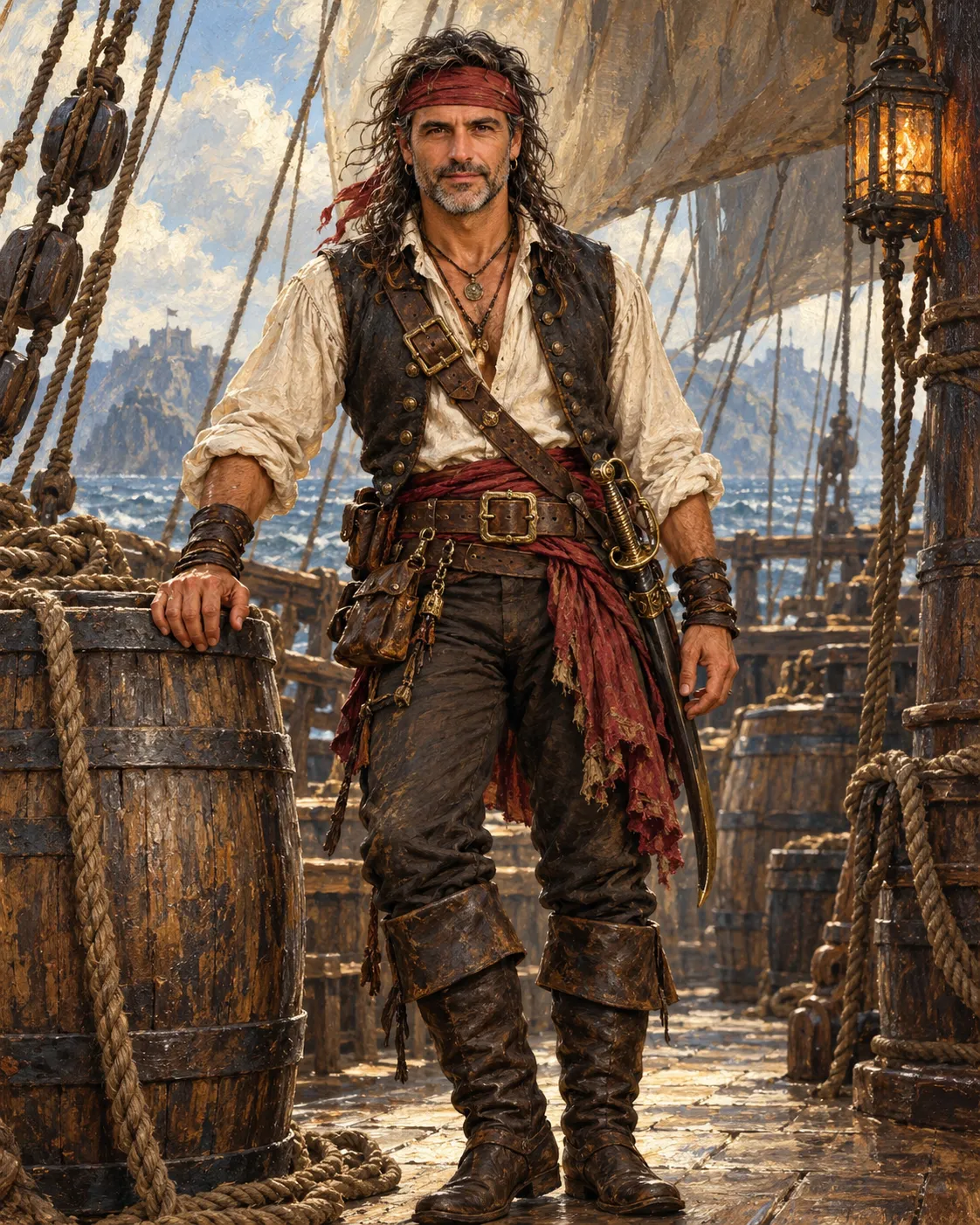
Transform an uploaded photograph into a detailed, full-length oil-painted portrait of the person as a fearless pirate aboard an old ship.
By Threads — Published on — Modified on
Example images
Prompt template
- Format
- Text
- Inputs
- Uploaded_reference_photo (image) · Required
- Outputs
- Pirate_portrait (image)
Create an image using the uploaded image as the primary identity reference for the adult subject, male or female.

IDENTITY AND FACIAL PRESERVATION:
Preserve the subject’s recognizable facial identity, apparent age, natural skin tone, facial structure, eye shape and color, eyebrows, nose, lips, cheekbones, jawline, hairline, and distinctive characteristics. Maintain authentic masculine or feminine features according to the uploaded subject. Do not change their gender, excessively beautify them, de-age them, or replace their face with a generic model. Adapt their hairstyle, clothing, physique, and accessories to create a fearless pirate adventurer while maintaining strong facial resemblance.

ARTISTIC STYLE AND ATMOSPHERE:
Create an exceptionally detailed, realistic traditional oil painting inspired by classical maritime portraiture, historical pirate illustrations, romantic realism, and cinematic adventure concept art. Reproduce authentic hand-painted oil textures, visible expressive brushstrokes, layered pigments, subtle canvas grain, irregular paint edges, atmospheric washes, and naturally blended shadows. Combine finely rendered facial details with looser, expressive background brushwork. The overall appearance must remain a genuine, museum-quality oil painting—not a photograph, digital 3D render, or cartoon.

COMPOSITION AND POSE:
Create a vertical 4:5, full-length environmental character portrait framed from just above the hairstyle to the lower legs and boots. Position the subject centrally, standing confidently on the weathered deck of an old pirate ship and facing directly toward the viewer. Give them a commanding upright posture, relaxed but strong shoulders, a slight natural hip shift, and a serious, fearless expression. One hand rests casually on a large wooden barrel while the other hangs naturally beside the body. Preserve realistic human anatomy, natural hand positioning, and believable proportions.

HAIR AND FACIAL DETAILS:
Style the subject’s hair in long, windswept, slightly tangled pirate-inspired locks, adapting naturally to their original hairline, texture, and color. Include a weathered burgundy-red bandana tied around the forehead, with loose hair framing the face. Add subtle sun-weathered skin, delicate freckles where appropriate, realistic facial contours, and finely painted individual hair strands. Optional small aged-metal earrings may complement the rugged maritime appearance. Keep facial hair appropriate to the original subject and their gender presentation.

PIRATE CLOTHING AND ACCESSORIES:
Dress the subject in authentic, rugged pirate clothing inspired by the golden age of piracy. Include a weathered ivory linen shirt with an open collar and loosely gathered sleeves; a fitted dark charcoal leather waistcoat with antique brass buttons; distressed leather wrist wraps; layered brown utility belts with oversized aged-metal buckles; dark fitted trousers; and tall, worn leather boots. Adapt garment cuts naturally to male or female anatomy without exaggerated proportions. Add small leather pouches, dangling decorative straps, antique jewelry, and layered necklaces. Render intricate stitching, tarnished metal, cracked leather, faded fabric, wrinkles, frayed seams, and natural wear with rich oil-painted detail.

ENVIRONMENT AND BACKGROUND:
Set the portrait aboard an old wooden pirate ship surrounded by towering sails, dark rigging, weathered ropes, and aged timber. Place a large wooden barrel near the subject’s resting hand, with additional barrels and nautical equipment farther behind. Include a softly glowing antique ship lantern high in the upper-right background. Massive, weathered canvas sails rise behind the character, creating strong diagonal shapes and atmospheric depth. Suggest misty ocean air and distant maritime scenery through loose, expressive paint strokes.

LIGHTING, SHADOWS, AND COLOR:
Recreate soft, diffused daylight filtering through cloudy maritime skies, balanced with warm amber illumination from the hanging lantern. Use gentle directional light from the upper-left/front, natural facial highlights, warm highlights across exposed skin, and deep but softly blended shadows beneath the chin, within clothing folds, and around leather accessories. Maintain subtle reflected light, restrained highlights, and painterly chiaroscuro. Use muted parchment beige, smoky slate gray, charcoal black, weathered brown, burgundy red, antique brass, warm amber, and natural skin tones. Preserve the original reference’s moody, desaturated vintage color palette.

CAMERA PERSPECTIVE AND DEPTH:
Simulate an eye-level portrait photographed with a full-frame camera and an approximately 50mm portrait lens. Use a natural perspective without facial distortion. Suggested reference settings: 50mm, f/4, ISO 200, 1/250 second. Keep the subject’s face, torso, clothing, and major accessories crisply defined through precise painterly detail. Allow the sails, rigging, barrels, and distant background to soften progressively through atmospheric depth, subtle brushwork, and restrained shallow-depth-of-field effects.

PAINTING QUALITY AND FINISH:
Emphasize lifelike facial anatomy interpreted through fine oil brushwork, realistic painted eyes with delicate catchlights, dimensional skin tones, individual hair strands, rich textile textures, and convincing leather and metal surfaces. Incorporate subtle pigment granulation, layered glazing, dry-brush highlights, aged parchment textures, and organically irregular watercolor-like borders surrounding the composition. Maintain dramatic storytelling, historical character authenticity, balanced anatomy, and sophisticated fine-art craftsmanship. Avoid cartoon styling, plastic skin, overly smooth digital effects, modern clothing, distorted hands, text, logos, and watermarks.

-- ar 4:5

Use a vertical portrait composition, emphasizing the full frame height, with a cinematic poster layout.



Comments — 0