Chinese-Style Branch-and-Flower Vignette Comic: One Branch at a Time
Create a 3:4 split composition pairing the unchanged original photograph with a delicate Chinese-style line illustration based on its most distinctive relationship.
Example outputs
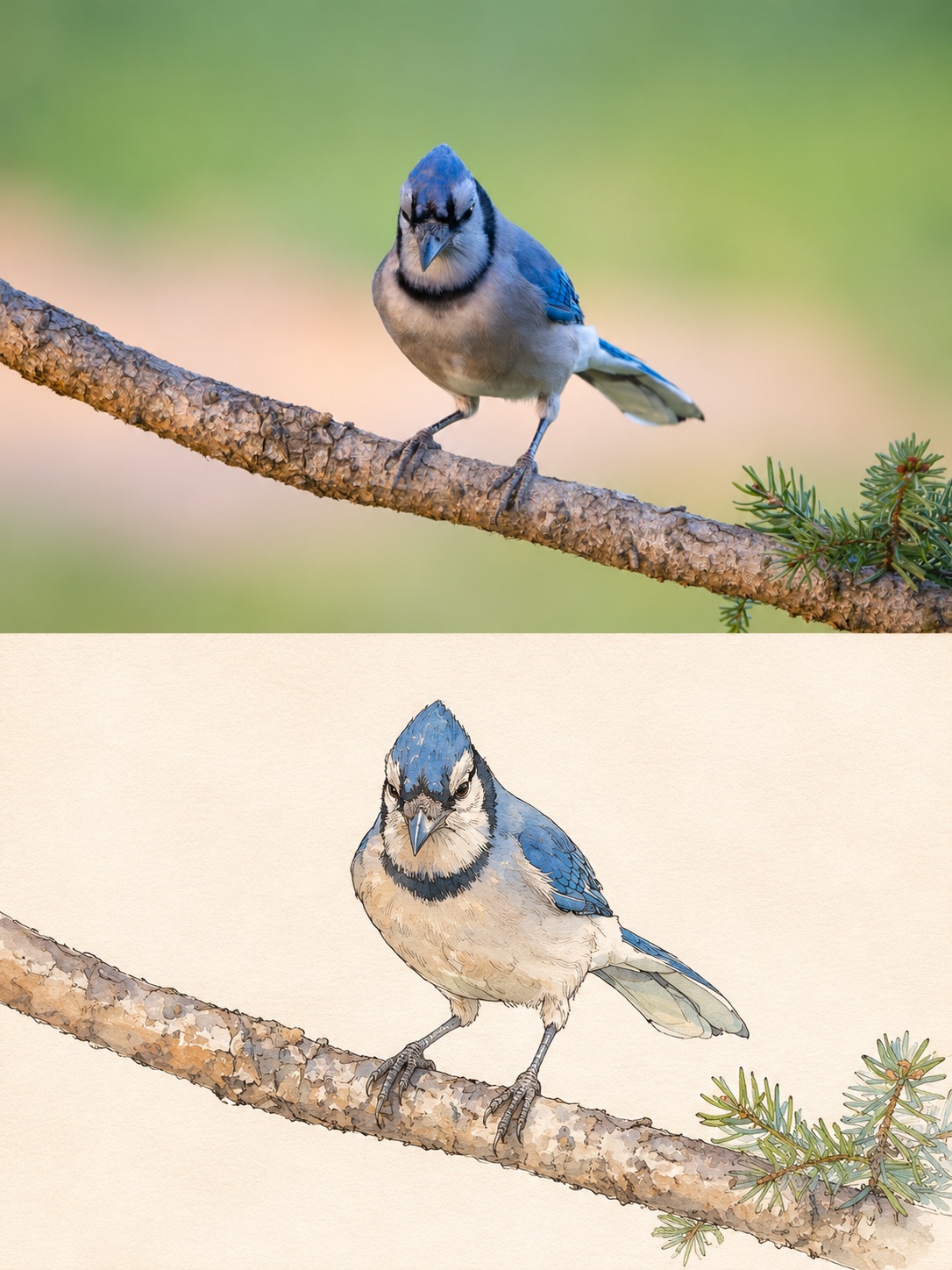
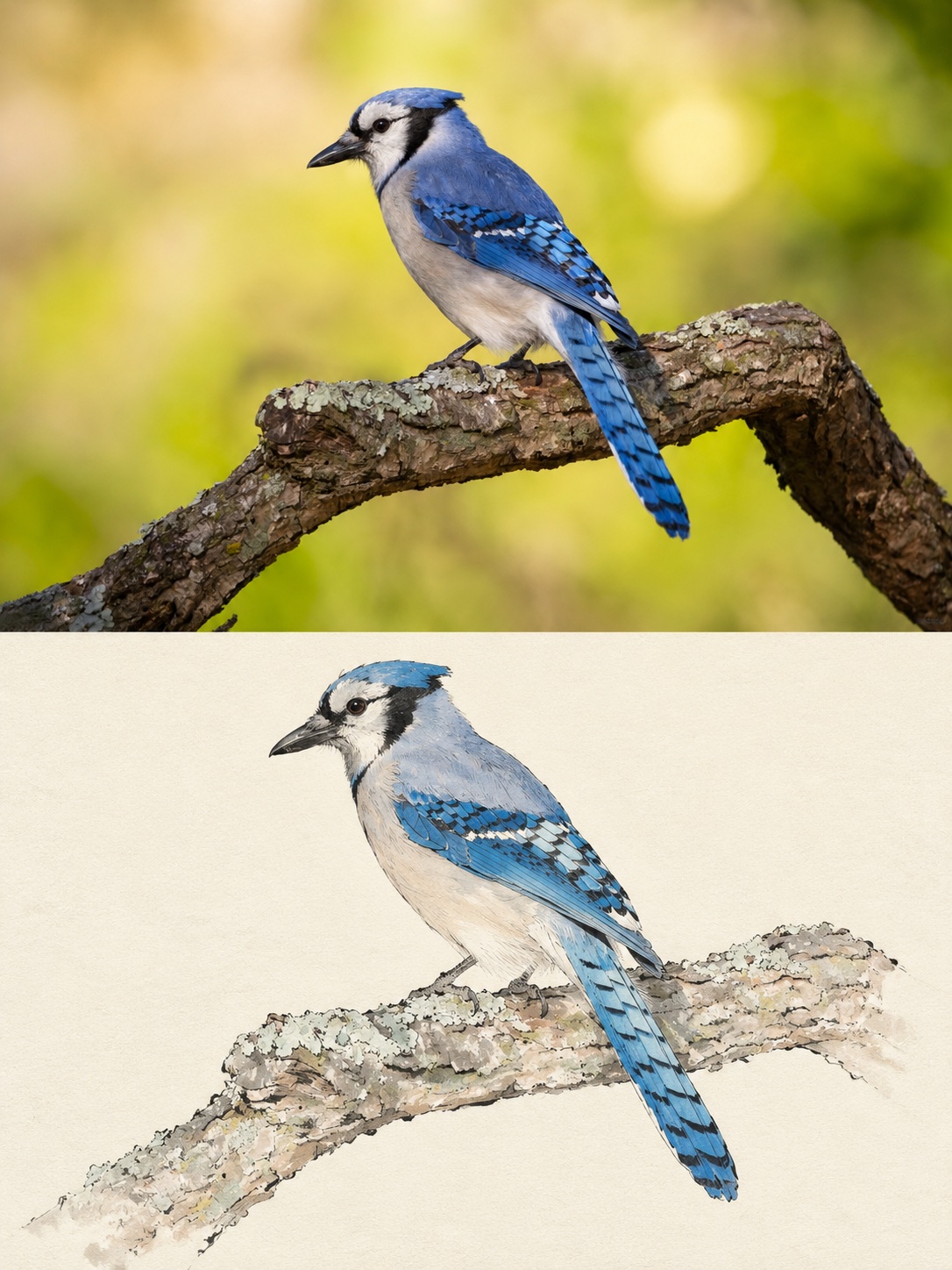
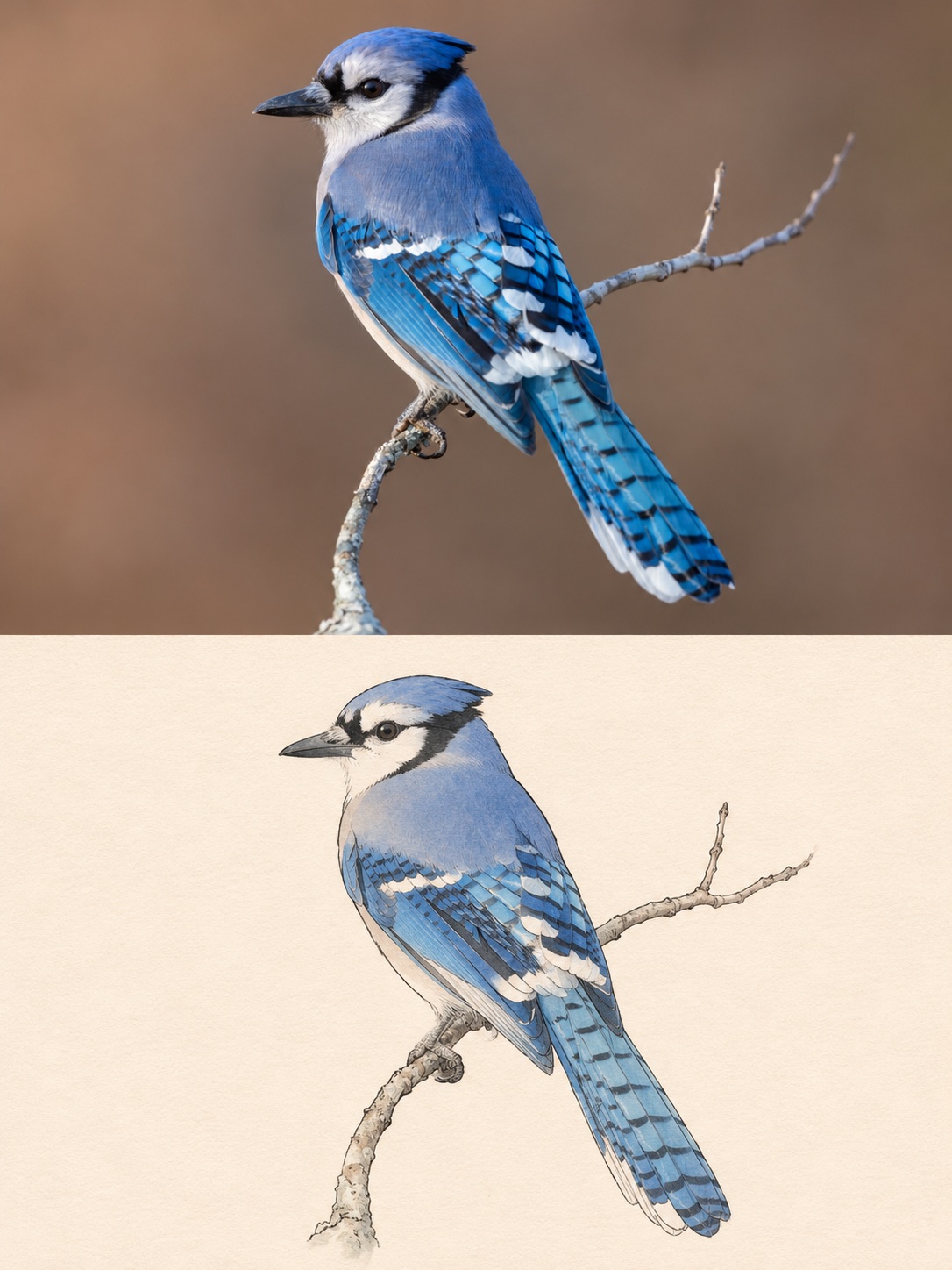
Prompt template
- Format
- Text
- Inputs
- Uploaded_photo (image) · Required
- Outputs
- Split_photo_and_illustration (image)
Using only the single uploaded photo, create a portrait-oriented photographic reinterpretation with a 3:4 aspect ratio. Divide the canvas horizontally through its exact center into two equal-width zones, each occupying 50% of the total height. The zones must meet directly, with no gap, divider line, or frame. Keep their contents separate: neither zone may overlap or extend beyond its boundaries. Do not combine in any other photographs.

In the upper zone, use the uploaded original photograph directly. Faithfully preserve the identity and number of subjects, their poses and expressions, spatial relationships, structure, natural lighting and shadows, and original colors. Do not redraw, recolor, stretch, distort, add or remove subjects, or generate an expanded image. Make only the necessary proportional fit, prioritizing important content. If cropping would damage a subject or its relationship to the surroundings, fill the gap with a neutral extension.

In the lower zone, redraw the same photo as a flat comic in a Chinese-style branch-and-flower vignette aesthetic. First identify one of the photo’s most distinctive relationships—for example, grasping, leaning, occlusion, emerging, or facing one another—and retain only the environmental cues needed to explain it. Let the source photo determine the focal hierarchy. Do not add branches, birds, people, or other props. Preserve a person’s face shape, hairstyle, clothing, expression, and action; an animal’s distinguishing features and pose; or the defining contours, direction of growth or extension, and front-to-back relationships of plants, architecture, and landscapes. Use fine, continuous ink lines to summarize the forms, slightly strengthening lines where forms overlap and allowing contours in bright areas to break naturally in places. Add fine detail only where it most helps identify the subject, such as a leaf edge, wing edge, or collar. Apply transparent, light washes that shift from richer to paler within the forms. Draw two or three soft color tones from the photo, deepening color in just one focal area. Omit irrelevant background details, and make the real contact, overlap, and orientation clearly convey this single moment. Do not use thick paint or gouache-like brushstrokes.

Use clean, warm off-white art paper with a subtle, even texture in the lower zone. Keep the subject a moderate size, with continuous paper-white space around it; the total negative space should occupy about one third of the lower zone. Arrange the open space in response to the original photo’s branch direction, contours, or lines of sight. Keep the composition balanced without forcing the subject to the center or shrinking it into a tiny icon. Do not change the identity or number of subjects, invent a story, mechanically trace the photo, apply only a filter, simulate three-dimensional paper craft, distress the image, or add dense noise. Add no title, inscription, seal, dialogue, logo, watermark, or decorative text.
What you'll create
The source photograph remains in the upper half while a delicate lower illustration reinterprets its subject relationship. The two equal zones meet directly without a border or overlap.
Usage instructions
Provide one photo containing a clear subject relationship. The prompt preserves the photo in the upper half and reinterprets that relationship as a restrained line illustration in the lower half; choosing a photo with a readable interaction or overlap will help the illustration remain grounded in the source.
Frequently asked questions
Can another photograph be added?
No. The composition uses only the single uploaded photograph.
Should a title or calligraphic seal appear?
No. Titles, inscriptions, seals and decorative text are excluded.


Comments
Tried this prompt? Share what you made, compare results, or ask a question