Split Photo and Minimalist Ink-Wash Composition
Transform a reference photo into a vertical, two-panel composition pairing the original photographic scene with a minimalist ink-wash reinterpretation.
Example outputs
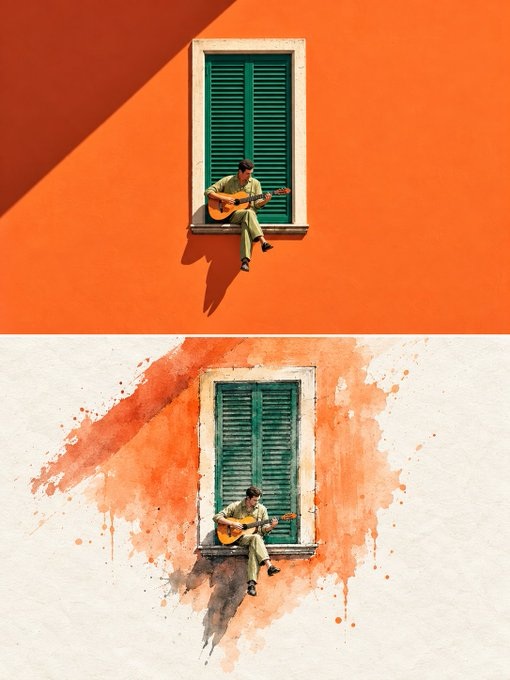
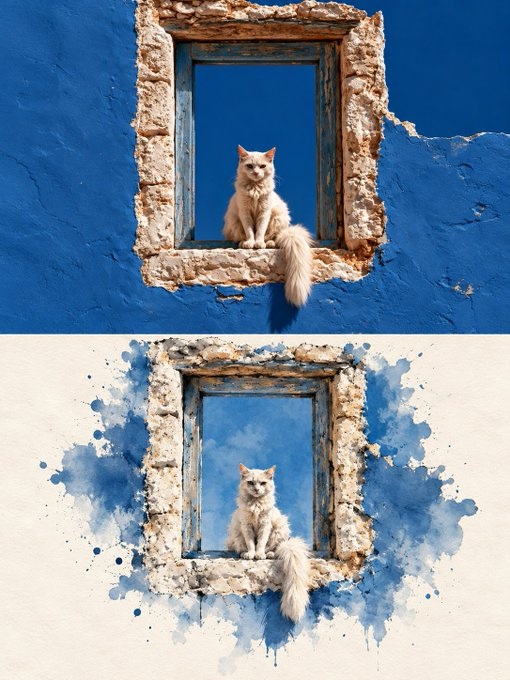
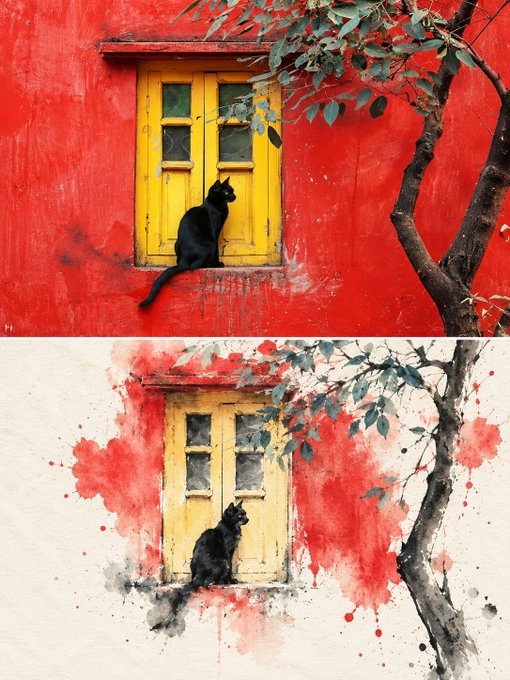
Prompt template
- Format
- Text Parameterized
- Inputs
- reference_photo (image) · Required aspect_ratio (text) · Optional · Default: 3:4
- Outputs
- split_photo_ink_wash_image (image)
Segmented Ink-Wash Reconstruction
${aspect-ratio:3:4} vertical composition · Split photography/ink painting · Contemporary East Asian aesthetics

Use the supplied reference photo to create a vertical image with an aspect ratio of ${aspect-ratio:3:4}. Divide the image into two regions with a strict 1:1 ratio, each occupying 50% of the image area.

Upper Region — Original Photographic Scene
Preserve the subject's identity, structure, viewpoint, realistic materials, natural light, and original color atmosphere. Apply only subtle, sophisticated color grading and image processing to achieve the feel of art-magazine or exhibition photography. Extend the background moderately to fit the canvas, but do not stretch, distort, or change the subject's shape, pose, or core composition.

Lower Region — Minimalist Ink-Wash Reconstruction
First, capture the subject's most memorable features, such as its silhouette, structure, directional flow, viewpoint, rhythm, and atmosphere. Then reconstruct the scene as a minimalist ink-wash composition. Do not copy the photograph's details or pursue realism. Retain only its most recognizable structure and distinctive character so that the correspondence with the original photograph above is immediately apparent.

Use an overall base of ivory, warm white, or paper white for the lower half, with delicate paper texture and natural grain. Construct the subject through intermingling ink tones, dry–wet contrasts, flowing areas of white, bleeding effects, accumulated ink marks, and considered use of negative space. Create a quiet, restrained, poetic East Asian visual aesthetic. Remove secondary details, retaining only the most distinctive outlines, structural transitions, spatial layers, and sense of movement. Rather than pursuing perfect realism, simplify and refine the scene into a memorable impression. Layer black, gray, and pale ink tones to create varying intensities and rhythms.

You may extract the most vivid colors from the original image to create visually striking washes. Locally translate these colors into clear blue-gray, delicate blue, soft gold, warm yellow, vivid red, pale cyan, or similar accents to emphasize the focal subject and emotional rhythm. However, ink tones and negative space must remain dominant. Avoid dull, heavy, aged brown tones, excessive ornamentation, and garish color combinations.

Make the central focal area more refined and concentrated, while allowing the edges to gradually blur, break apart, and disappear, visually interacting with large areas of negative space. Within the lower section, the subject composition should occupy approximately 30%–45% of the area, leaving the remainder as generous negative space. The composition may be tilted, framed, or slightly cropped, but it must maintain asymmetrical balance and a high-end editorial aesthetic. Negative space is not merely emptiness; it is an essential part of the visual structure. Reduce information rather than filling the entire image, allowing the main focus to resemble an ink painting or an East Asian decorative artwork.

Text Treatment
Allow only a very small amount of editorial text, and do not use a predetermined title or numbering. You may derive a few words or short phrases from the subject, place, time, action, emotion, or metaphor, then place them quietly in the negative space or along the subject's edge. Keep the text concise and naturally flowing, never loud or dominant.

Overall Direction
Use contemporary East Asian aesthetics, minimalist ink-wash reconstruction, small seal motifs within a large artwork, clean typography, and an exhibition-poster aesthetic. Avoid complex background treatment, excessive realistic detail, overdecoration, and too much text. Use a clean template layout and avoid an overcrowded composition.
Replace the ${…} placeholders with your values
before using this prompt. See parameters
and defaults below
Parameters
Replace each placeholder with your own value, or use its default when one is provided
${aspect-ratio:3:4}
aspect-ratio
Default: 3:4
What you'll create
A vertical artwork gives equal space to a realistic source scene and a minimalist ink-wash reconstruction. Clean typography, restrained seal motifs and generous space support an exhibition-poster aesthetic.
Frequently asked questions
How much space does each treatment receive?
The photographic and ink-painted regions each occupy exactly half the image.
What remains consistent in the photographic region?
Subject identity, viewpoint, realistic materials and the core composition are preserved.


Comments
Tried this prompt? Share what you made, compare results, or ask a question