Minimalist Morning Posters with Hand-Drawn Lines
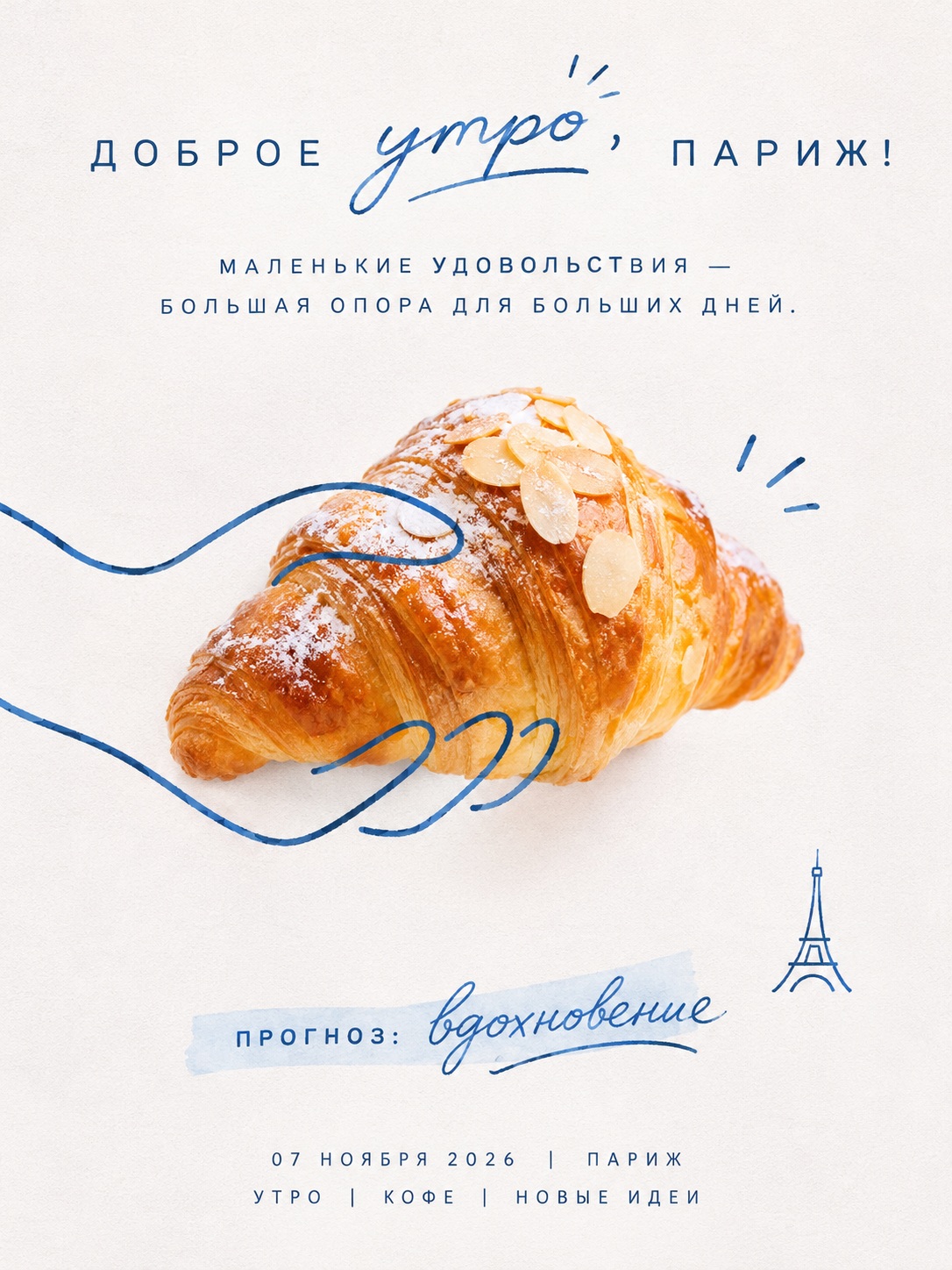
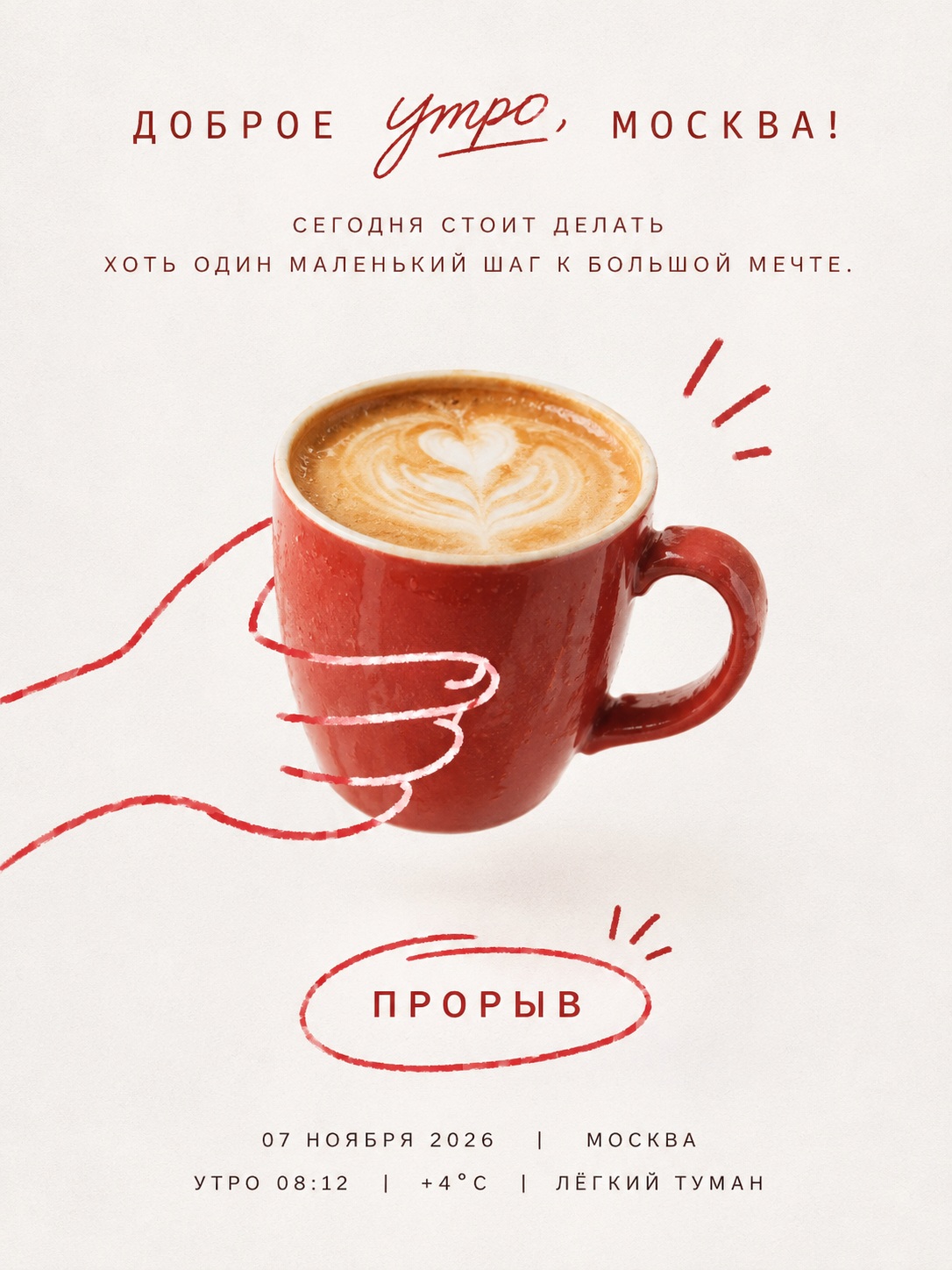
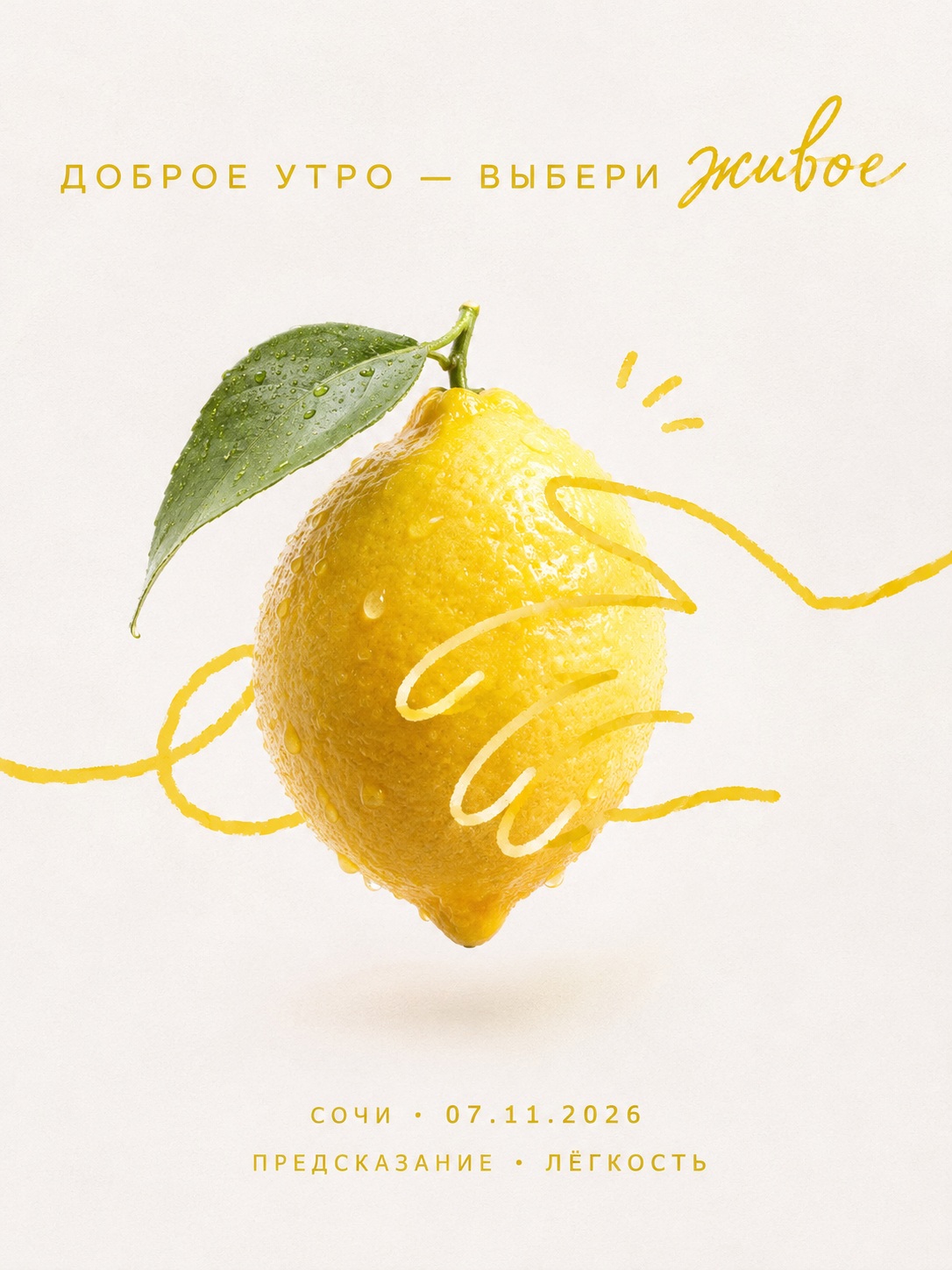
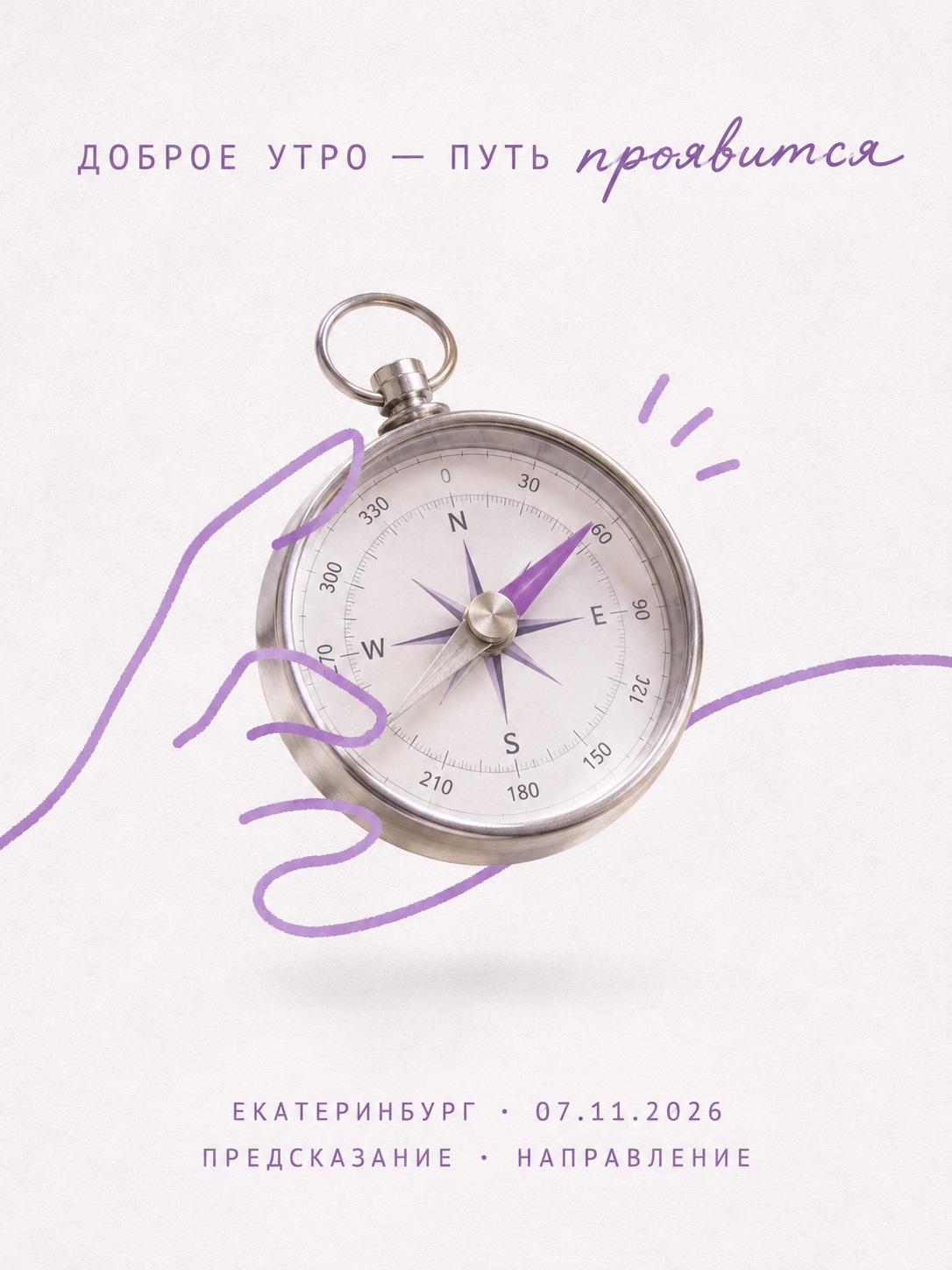
Create 10 separate, city-specific morning greeting posters, each with a distinct color concept, a realistic central object, and a loose hand-drawn line that interacts with it.
Example outputs
Prompt template
- Format
- Markdown
- Outputs
- Citymorning_poster_series (image)
Create 10 separate, bright, clean, minimalist promotional posters on the theme of good morning. Each poster must be dedicated to a different city and include a date and a one-word prediction.

For each poster, invent a current, philosophical, slightly niche, original short quote in the style of popular brief quotations. Write the text, choose the main object, and create a logical connection between them. Use a fresh, gentle, light, aesthetically pleasing palette.

Composition and central object:
- Use a mostly near-white background with subtle paper grain, soft scanned-noise texture, and low-contrast shadows. Keep the background clean, airy, and uncluttered; do not add a complex scene or busy surroundings.
- Place a compact main object with crisp edges at the center, appearing to float. Use a realistic photograph or a highly photorealistic object texture, with warm or natural colors suited to its material. Realistic surface details may include translucency, condensation droplets, foam, glass sheen, paper texture, metallic reflections, and soft surfaces with natural highlights.
- Leave generous open space at the top. Reserve the bottom for small information text.

Key visual device:
- Add one solid-color, hand-drawn line whose color and character suit the poster’s theme. Use a restrained, clean, sufficiently dark accent color for both this line and the text; keep it to a small area while maintaining visible contrast.
- The line must begin on one side of the object, cross over its front surface, and extend beyond it onto the open background. It should suggest a gesture, as if someone is holding, embracing, outlining, or lightly touching the object.
- Use continuous, loose, slightly irregular, thick strokes. Do not aim for anatomical accuracy or turn the line into a neat, detailed illustration. Suggest closeness and touch with several long curved strokes, short broken marks resembling finger joints, and partial overlaps. Preserve the contrast between the realistic photographed object and the casual hand-drawn mark.

Typography:
- At the top, place a short, expressive, single-line slogan. Use a monospaced or sans-serif font with a slightly mechanical character. One key word in the middle of the phrase may use a flowing handwritten font.
- Use generous letter spacing and a light, thin weight. The typography should feel like a casual personal note, not a loud brand advertisement.
- At the bottom, place two lines of small informational text in a monospaced font. Center-align them, keep them compact and visually light, include only a little information, and use rhythmically spaced separators. These lines should convey context, atmosphere, time, and place without distracting from the main object.
- Include the poster’s date and one-word prediction.

Overall aesthetic:
- Use realistic product-photography lighting, a minimalist composition with generous negative space, loose sketch-like or blueprint-like graphic lines over the photograph, subtle paper texture, a barely perceptible printed-image effect, and a clean, tidy, modern look.
- Avoid a dirty or cluttered background, oversized or heavy text, an object that occupies too much space, or a hand-drawn line so precise that it loses the feeling of gently touching a real object.

Generate 10 individual images, one after another. Each image must show a different city, use one primary color, and have its own unique color concept based on a different hue from the color spectrum. Make every image 3:4. Do not combine the images into a collage or grid, and do not create one composition and then split it into separate images.
What you'll create
Each separate poster combines one city, a one-word prediction and a short original quote with a logically related object. Near-white paper texture, gentle colors and ample clean space create an airy series.
Usage instructions
No additional input is required: the prompt asks you to choose the cities, objects, and original quote text. It specifies a 3:4 format and requires each poster to use its own city and distinct primary color; the central object and matching accent color are the main visual controls.
Frequently asked questions
Is the output one combined grid?
No. Ten separate images are requested.
Can all posters use one main color?
No. Each has its own distinct primary color.




Comments
Tried this prompt? Share what you made, compare results, or ask a question