Rubber-Stamp Travel Journal Poster from a Photo
Turn each travel photo into its own 3:4 vertical poster, pairing the preserved original photo with an English-text rubber-stamp travel print based on the same scene.
Example outputs

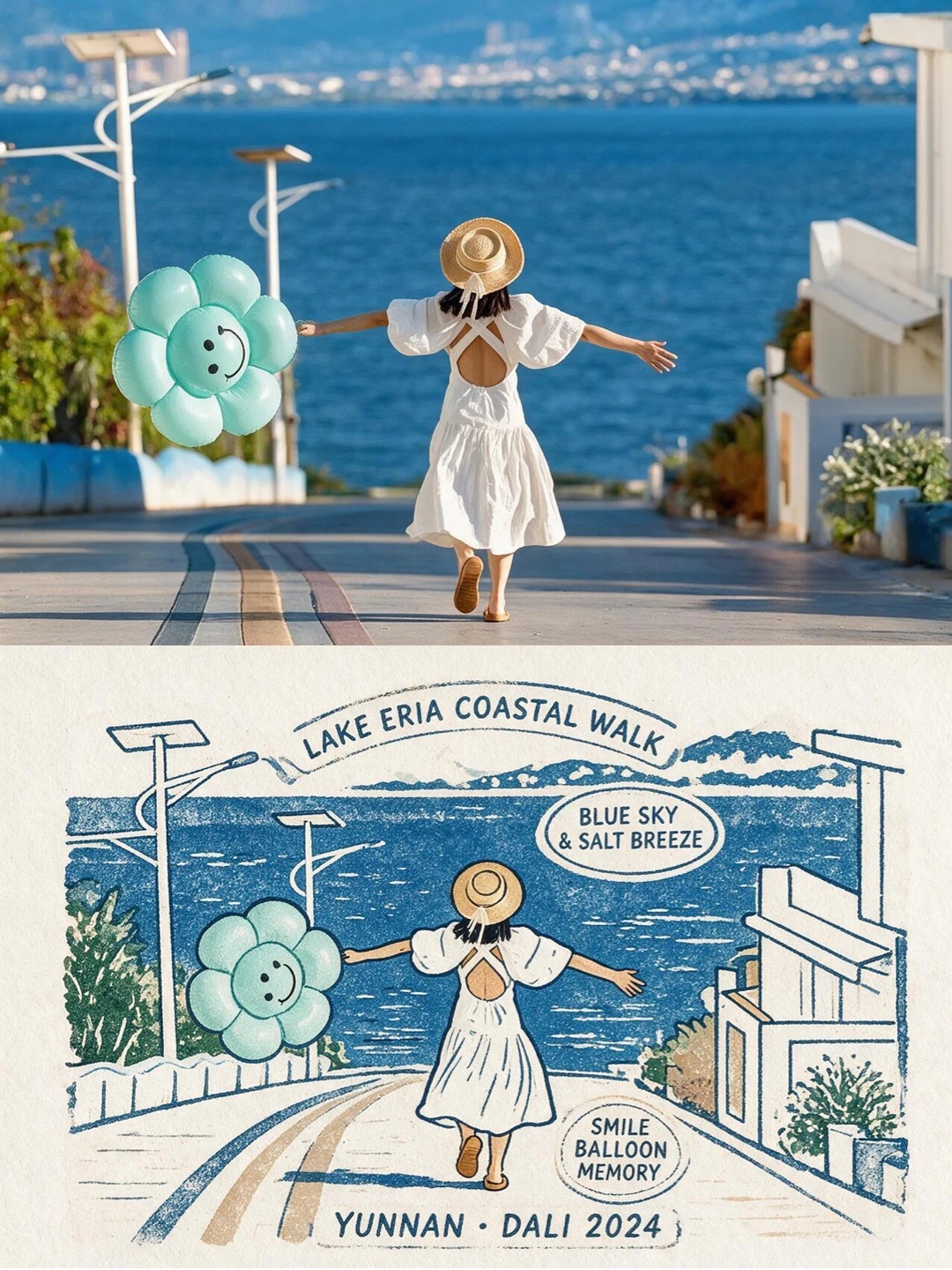
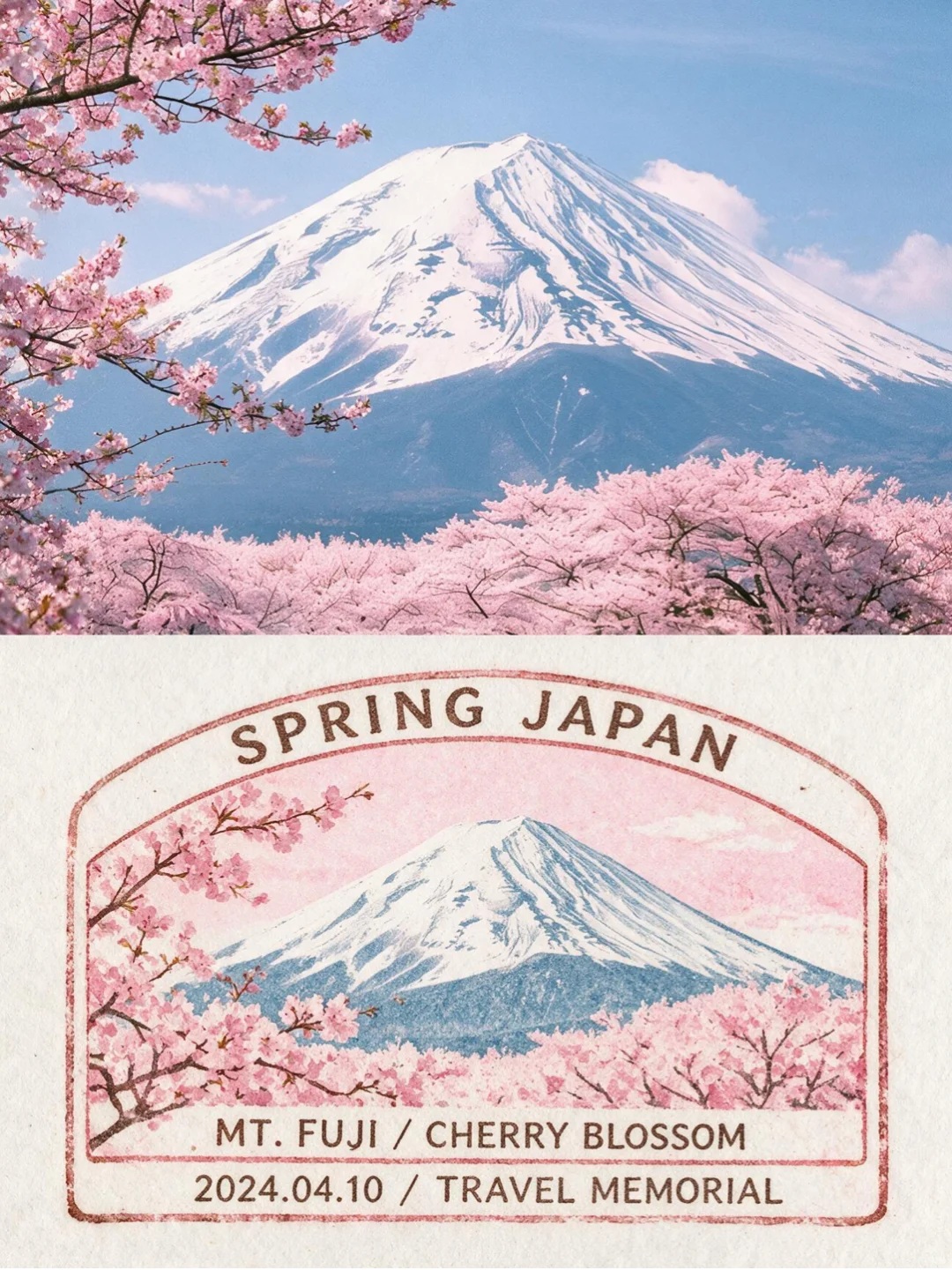
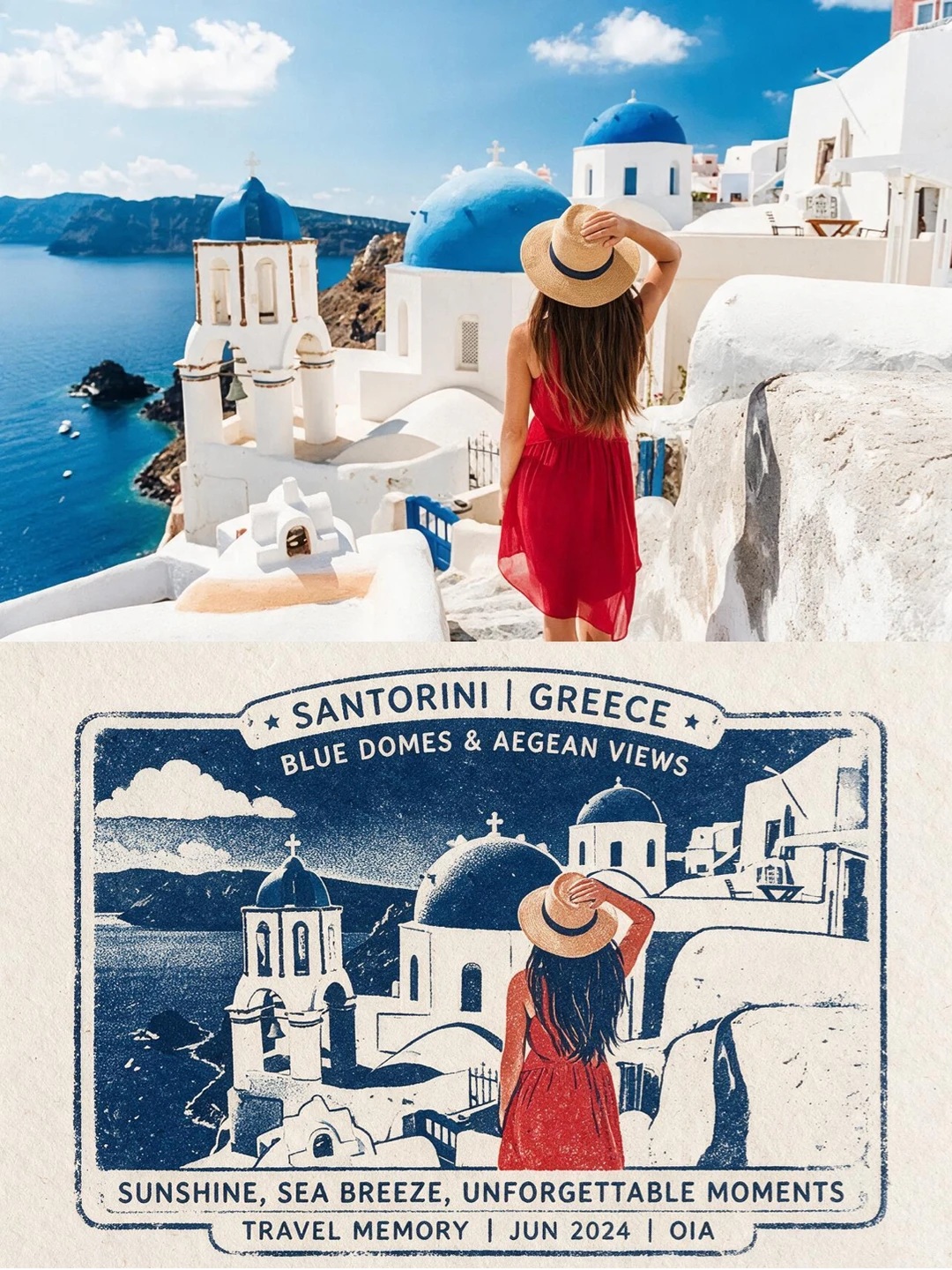
Prompt template
- Format
- Text
- Inputs
- Travel_photo (image) · Required
- Outputs
- Travel_journal_poster (image)
For each uploaded photo, create one separate “rubber-stamp travel journal poster.” Output one finished poster per photo. Do not make a collage, combine multiple photos, or reuse the same text across different photos.

Use a 3:4 vertical composition divided into equal top and bottom halves, each occupying exactly 50% of the image. Do not draw a prominent dividing line.

In the top half, preserve the corresponding original photo in full: keep the identity of its subject, the proportions of people or objects, terrain, architecture, plants, spatial relationships, pose, perspective, natural light, shadows, depth of field, realistic textures, and original color atmosphere unchanged. Allow only subtle, art-publication-quality photo color grading and extremely fine film grain. To fit the vertical format, use natural cropping and slight background extension if needed, but do not stretch, distort, move, replace, or redraw the subject, and do not add unrelated elements. Remove all visible English text, logos, brand marks, watermarks, corner marks, and platform artifacts from the original photo. After removal, keep the background material and lighting naturally continuous.

In the bottom half, use the same photo as the sole visual reference and reinterpret it as a rubber-stamp travel-journal poster. Preserve the original scene’s main outlines, structure, visual center, spatial flow, distinctive details, inherent colors, and mood, while reorganizing them in the style of a hand-printed rubber stamp, a vintage travel commemorative stamp, and an independent-publishing print. Give the print restrained, refined texture: slightly uneven stamped edges, subtle ink bleed, and visible paper fibers.

Create short English copy specifically from the visual information in each photo, such as a sense of place, architectural features, natural scenery, a person’s demeanor, seasonal light, or a travel memory. Do not use the same copy for every image, and do not reproduce English text, logos, or watermarks from the original photo. Integrate the English text naturally into the stamp design. It may include a short title, a date-like number, a place-inspired phrase, or a commemorative stamp mark, but its content must come from visual cues in that photo and be newly worded.

Make the top and bottom form a clear contrast: the top is the real original photo, and the bottom is a rubber-stamp travel-journal reinterpretation of that same photo. Keep their themes consistent without simply copying the photo. Keep the prompt description in Chinese; use English for text within the image.
What you'll create
A vertical equal-half layout retains the source scene above and recasts its visual cues as a travel-journal design below. Newly worded English annotations connect the halves without a strong dividing line.
Usage instructions
Provide the travel photos as image references; each photo is processed separately and produces one poster. The lower-half English copy should come from visible details in each photo, so choose images with clear scene or location cues for more grounded text.
Frequently asked questions
Can the same caption be reused for all photographs?
No. Each image needs newly worded text grounded in its visible cues.
Is a thick border between halves required?
No. A prominent dividing line is excluded.





Comments
Tried this prompt? Share what you made, compare results, or ask a question