Photo-to-Commemorative-Stamp Poster
Create a separate 3:4 vertical poster for each uploaded photo, pairing the original photograph with a custom color-overprinted commemorative stamp.
Example outputs
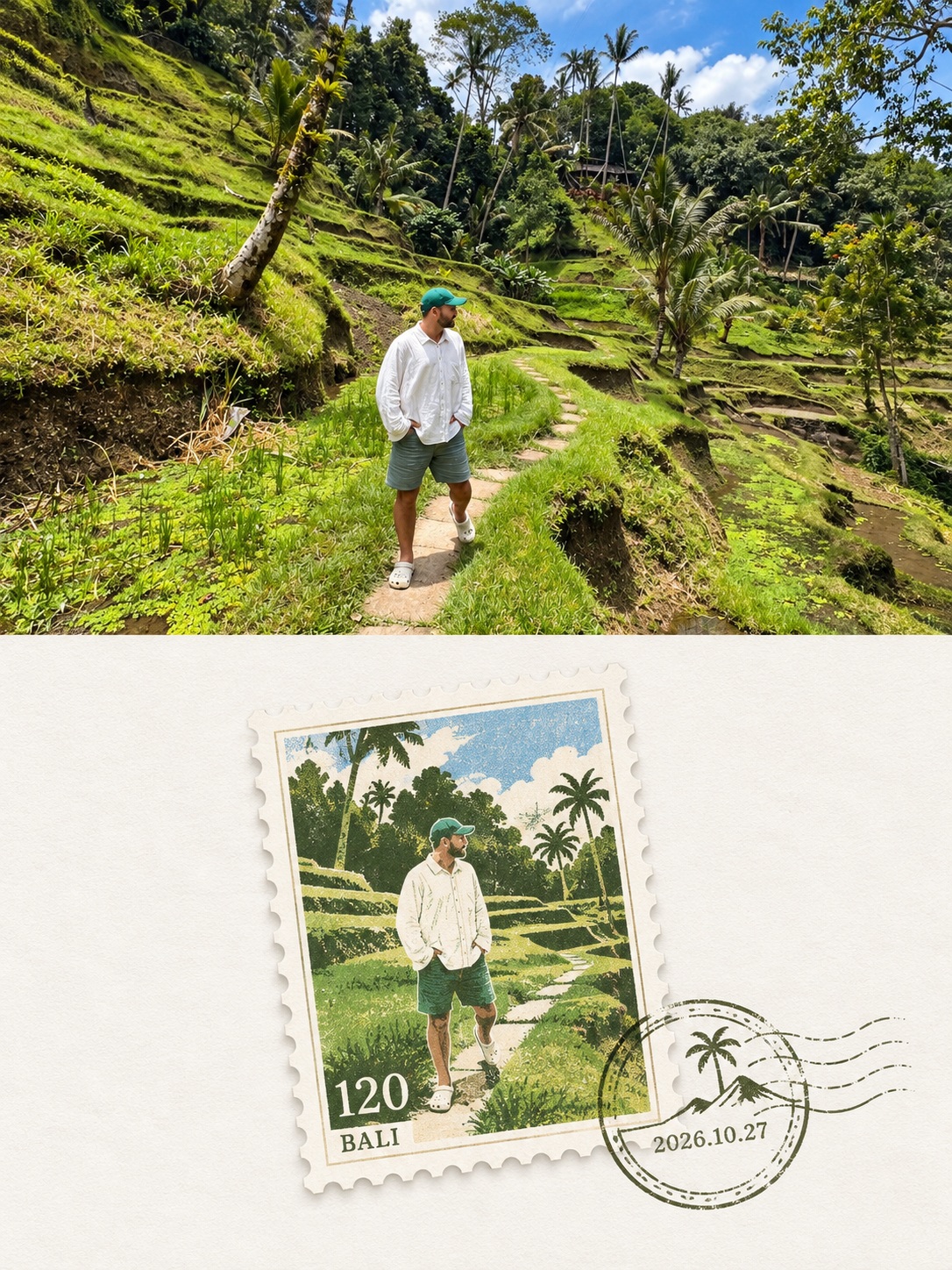
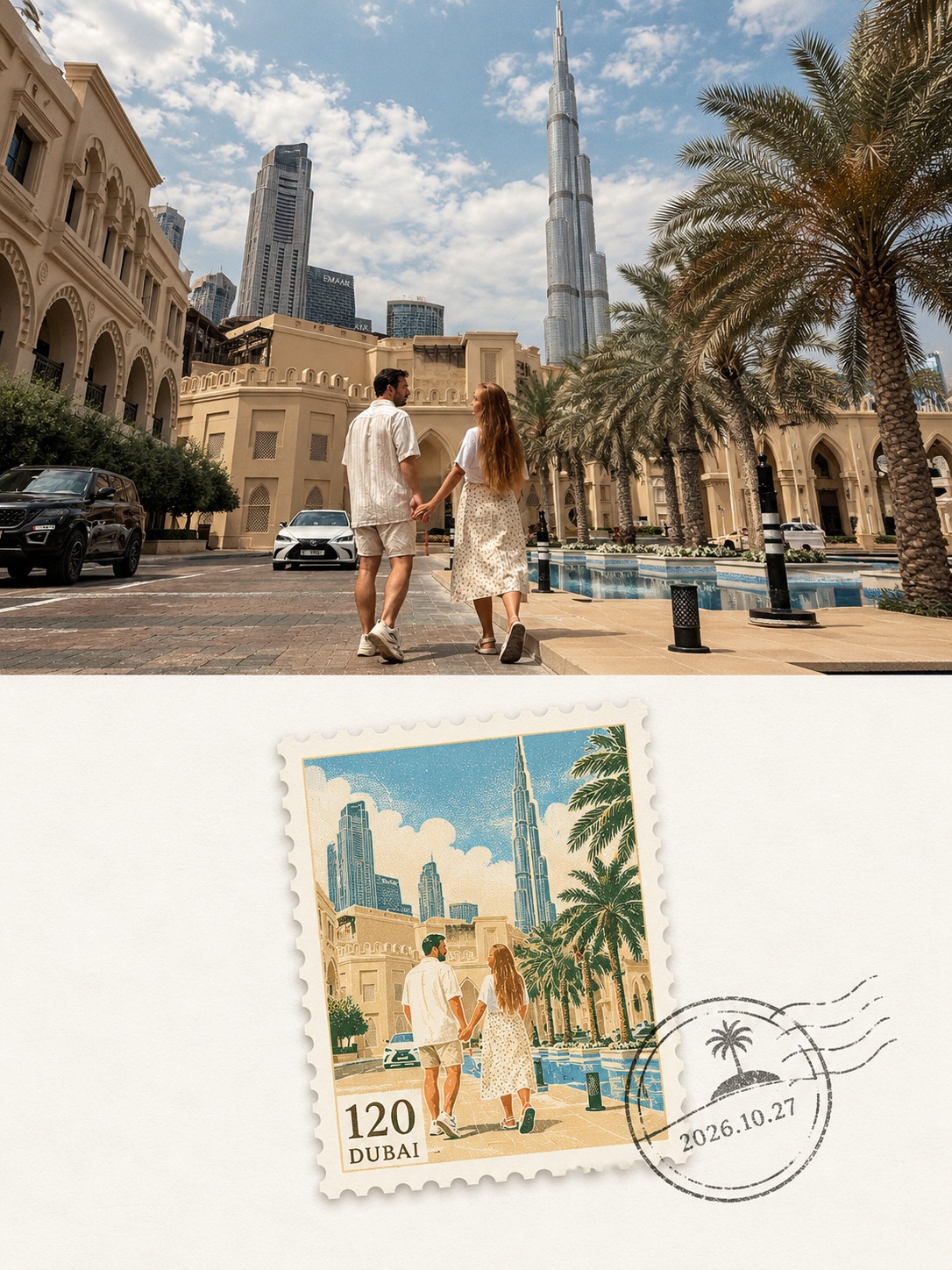
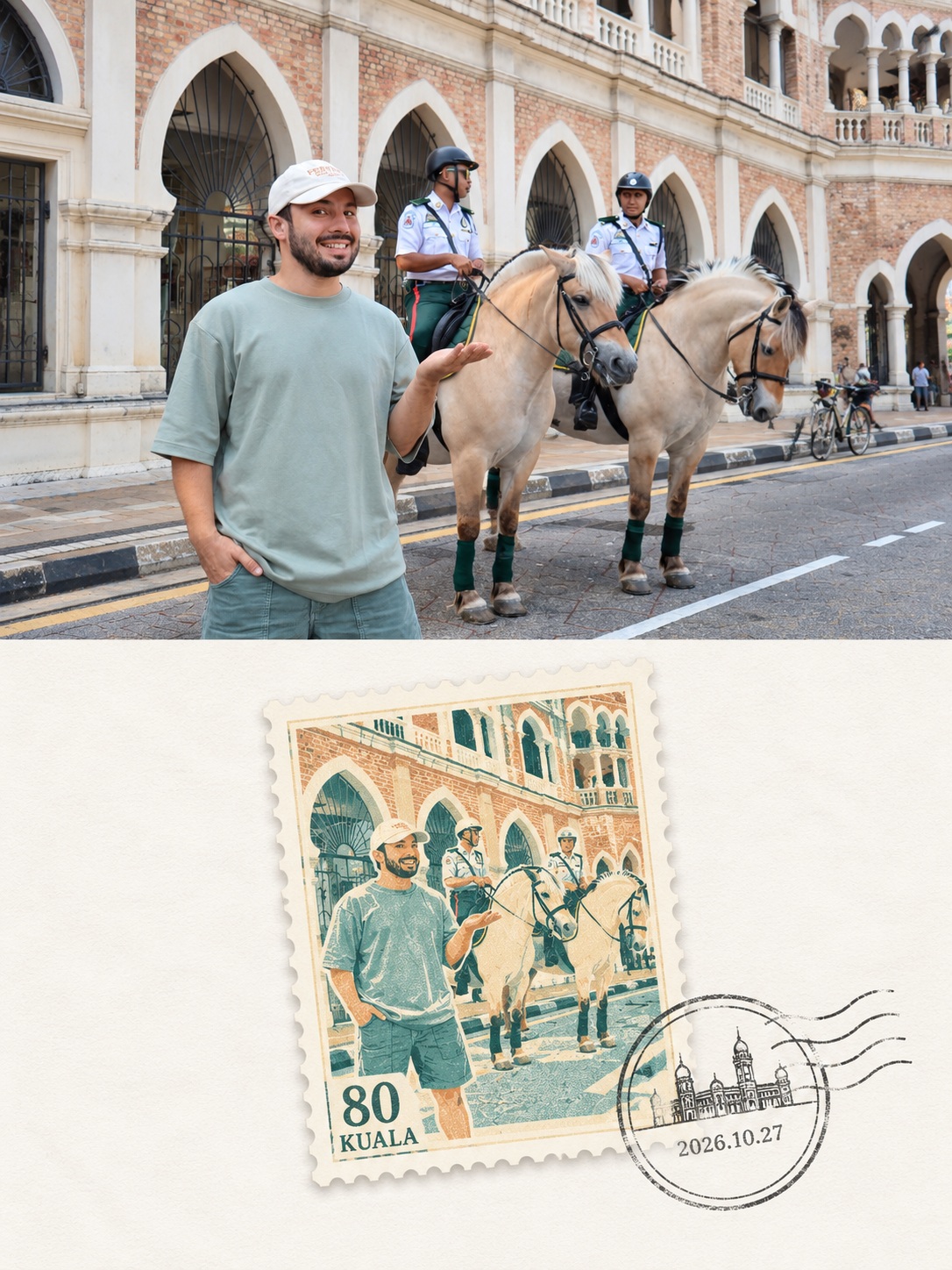
Prompt template
- Format
- Text
- Inputs
- Uploaded_photo (image) · Required
- Outputs
- Poster (image)
Turn each uploaded photo into its own advanced design poster. Output each photo separately; do not splice multiple photos together. Use a 3:4 vertical composition divided into equal upper and lower halves, each occupying exactly 50% of the image.

In the upper half, retain the original photo, preserving the subject’s identity, structure, posture, true texture, natural light and shadow, and original color atmosphere. Apply only subtle, refined color grading to give it the feel of an art magazine, independent publication, or exhibition image. You may naturally extend the environmental background to fit the frame, but do not stretch, distort, or alter the subject. Show only the uploaded photo in its original framing: add no text, borders, or graphics.

In the lower half, extract the photo’s most recognizable subject, outline, posture, and narrative relationship, and reinterpret them as a color-overprinted commemorative stamp. The stamp should have perforated edges, with a circular postmark partly overlapping one corner. Do not copy the photo. Keep only the subject’s most essential contours and gestures, summarized with silhouettes, color blocks, and a small number of engraved lines, so the connection to the photo above is immediately recognizable.

Use a “small stamp, large blank space” composition. The stamp should occupy about one-third of the lower half’s width, be slightly rotated and tilted to one side, and rest on very pale milky-white paper, with generous blank space around it. Make the stamp’s main area a large color-block graphic, surrounded by a narrow white edge and a thin wireframe border. Position the main graphic toward the inner side of the frame, leaving a sense of breathing room. Place the circular postmark partly over the stamp’s lower-right corner. Use a lighter ink color for the postmark than for the stamp, and make its ring intermittent.

Extract the three most eye-catching colors from the photo above, including at least one color from the subject itself. Refine them into bright spot inks and use color separation and overprinting. Let the color-block edges be slightly misregistered, with a third color appearing naturally where they overlap. Use only one dark color for the postmark. Keep the background paper extremely light, bright, and clean, with much higher brightness than the stamp; do not make it yellowish or grayish.

Use the texture of colored dots and granular ink. Add small gaps along the perforation edges, broken ink and uneven pressure in the postmark, and only very fine fibers in the paper. Keep overprint misregistration, broken ink, and particles inside the graphics only. The boundaries of the perforations and wireframe must remain clear and regular.

Text may appear only on the stamp and postmark:
- Put an integer face-value number between 30 and 200 in the stamp’s lower-left corner.
- Put one small, all-uppercase English word at the bottom of the stamp, drawn from the photo’s subject and no more than ten letters long.
- Put “2026.10.27” in the postmark ring.

Use a small serif or typewriter font, aligning the stamp text to the stamp edges and baseline. Do not include any other text, letters, numbers, or signs anywhere in the image.

The overall visual relationship between real photography, color-overprinted stamps, and small monuments should feel bright, clean, restrained, and collectible. Avoid a dirty or old-fashioned look, full-page textures, realistic illustrations, multiple stacked stamps, complex decorations, commercial advertising copy, and a templated appearance.
What you'll create
The upper half retains the photograph with restrained editorial grading. Below it, the recognizable scene becomes a color-overprinted perforated stamp with a partly overlapping circular postmark.
Frequently asked questions
Are multiple uploaded photos combined?
No, each photo receives its own separate poster.





Comments
Tried this prompt? Share what you made, compare results, or ask a question